


Table of contents
- Understanding the Real Cost of Recording a Song in Nigeria
- What Influences Music Recording Costs in Nigeria?
- What Most Artists Get Wrong About Saving Money in the Studio
- What Is Included in a Typical Recording Package?
- How Long Does It Take to Record a Song in Nigeria?
- Which Types of Songs Cost More to Record in Nigeria?
- Why Studio Preparation Matters More Than Budget
- Conclusion: Real Cost vs Real Value in Nigerian Music Production
Recording a song in Nigeria is no longer a mystery reserved for insiders. But despite how common music production has become, many artists still struggle to understand what they should realistically budget for a full song.
Prices vary widely depending on the studio, producer experience, genre, and how prepared the artist is. While some artists assume recording is cheap and fast, real studio workflows show a different picture—one shaped by time, personnel, revisions, and production quality.
Based on real studio experience from Nigerian producers, including insights from Cfatmusic Studios, recording a professional song can cost anywhere between ₦80,000 and ₦150,000 per track, and sometimes more depending on complexity and live instrumentation.
But the cost is only part of the story.
Understanding the Real Cost of Recording a Song in Nigeria
In most Nigerian studios, pricing is not just about “sitting down and singing into a microphone.” It includes a full production chain: beat creation, recording sessions, editing, mixing, and mastering.
According to Producer Agobose of Cfatmusic Studios, most artists typically pay between ₦80,000 and ₦100,000 for standard recording sessions. However, when live instruments such as guitars, saxophones, percussion, or trumpets are introduced, the cost can rise to around ₦150,000 per song.
This reflects a broader reality in Nigerian music production: the more musical layers involved, the higher the cost and time investment.
A simple vocal recording session is very different from a fully arranged track involving multiple instrumentalists.
What Influences Music Recording Costs in Nigeria?
One of the biggest misconceptions among upcoming artists is that studio cost is fixed. In reality, several factors affect pricing.
A major factor is instrumentation. When a song requires live guitarists, keyboardists, saxophonists, or percussionists, the budget increases significantly. These professionals are usually paid separately or factored into the production cost.
Another factor is production depth. Some artists only need a basic beat and vocal recording. Others require full arrangement, background vocals, and layered instrumentation.
Finally, artist preparation plays a major role. Unprepared artists often extend studio time, increasing overall cost.
In real practice, a well-prepared artist can finish a song faster and cheaper than someone who needs multiple corrections and rewrites during the session.
What Most Artists Get Wrong About Saving Money in the Studio
Trying to save money is natural, but many Nigerian artists end up doing the opposite.
One major mistake is rushing studio sessions due to hourly billing. When artists feel pressured by time, they record quickly without refining their performance. The result is usually a weaker song that could have been much better with patience.
Another common issue is poor preparation. Many artists enter the studio without rehearsing properly, expecting the producer to fix everything during editing. This leads to longer sessions and higher costs.
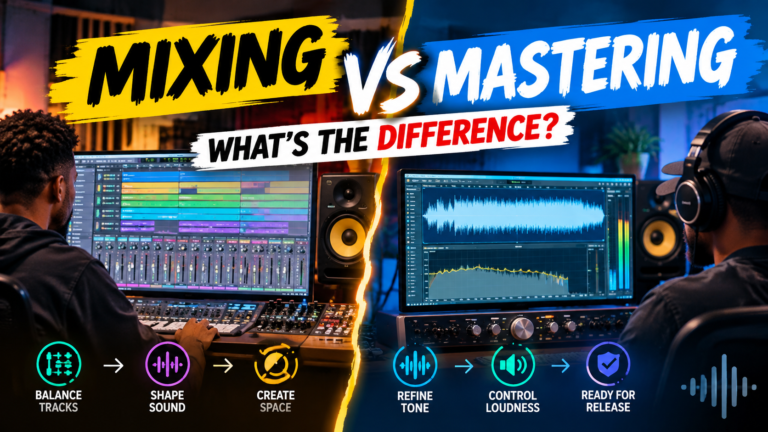
There is also the problem of underestimating mixing and mastering. Some artists assume a song is complete after recording vocals, not realizing that post-production is where professional sound quality is achieved.
In many cases, artists who try to save money initially end up paying twice—either by re-recording the song or switching studios.
What Is Included in a Typical Recording Package?
At Cfatmusic Studios, a standard song package usually includes full production services: beat production (if needed), vocal recording, editing, mixing, and mastering.
This kind of all-in-one structure is common in Nigerian mid-level studios, especially those working with independent artists.
However, revisions are usually limited. In many professional setups, artists are given about two revision stages:
- One for vocal re-recording or corrections
- One for mix adjustments
Beyond that, additional changes may attract extra charges, especially if the entire vocal performance needs to be redone.
This system exists to maintain efficiency and ensure that projects move forward without unnecessary delays.
Add-ons such as backup vocals, live instruments, or additional arrangement layers are usually charged separately.
How Long Does It Take to Record a Song in Nigeria?
The timeline for completing a song depends heavily on artist readiness and production complexity.
→ For a fast, well-prepared project:
- Beat production: up to 3 days
- Recording session: 1 day
- Mixing and mastering: up to 3 days
Total: around 1 week
→ For average projects with multiple adjustments:
- Timeline extends to about 2 weeks due to revisions and delays.
For complex productions involving live instruments or rewrites:
- The process can take up to 1 month
According to Producer Aguboss, delays are usually caused by repeated changes, lack of preparation, and indecision during recording sessions.
Interestingly, highly prepared artists can sometimes finish everything in a single day, especially when the creative direction is clear from the beginning.
Which Types of Songs Cost More to Record in Nigeria?
Not all genres behave the same in the studio.
Gospel music, for example, often costs more and takes longer to produce. This is because gospel recordings frequently require live instrumentation, vocal layering, and a high level of emotional and technical precision.
A simple worship concept can quickly evolve into a full production involving keyboardists, saxophonists, guitarists, and backup singers.
In one real studio case shared by Producer Agobose, a simple worship medley ended up requiring multiple instrumentalists and backup vocalists. What began as a straightforward project became a more complex arrangement with higher cost and longer production time.
Afrobeats and hip-hop projects can be faster, but they still depend heavily on artist performance quality and clarity of direction.
Why Studio Preparation Matters More Than Budget
One of the strongest lessons from Nigerian studio culture is that preparation often matters more than money.
Artists who rehearse properly before entering the studio tend to:
- Record faster
- Spend less money
- Require fewer revisions
- Produce higher-quality songs
On the other hand, artists who rely on improvisation during sessions often struggle with timing, consistency, and decision-making.
A clear concept, rehearsed lyrics, and a defined direction can significantly reduce production time and cost.
Conclusion: Real Cost vs Real Value in Nigerian Music Production
So, how much does it cost to record a song in Nigeria?
In reality, most professional recordings fall between ₦80,000 and ₦150,000 per song, depending on complexity, instrumentation, and production depth.
But the true cost is not just money—it is time, preparation, and clarity of vision.
Artists who rush the process often end up spending more in the long run. Those who plan properly, communicate clearly, and respect the production process usually get better results within a shorter time.
Ultimately, recording a song in Nigeria is not just about paying for studio time. It is about investing in a structured creative process that turns ideas into commercially ready music.







[…] How Much Does It Cost to Record a Song in Nigeria? […]