

Table of Contents
One of the first questions every upcoming artist asks is, “How much does it cost to record a song in Nigeria?”
The answer is simple—but not straightforward.
You can walk into one studio and hear ₦50,000. Another studio may charge ₦150,000. A premium producer might quote ₦300,000 or more for the same single.
Does that mean one producer is overpriced?
Not necessarily.
After producing songs for artists over several years, I have learned that the biggest mistake artists make is assuming they are paying for a few hours inside a recording booth. In reality, they are paying for creative direction, production experience, problem-solving, editing, mixing, mastering, and the countless decisions that transform an ordinary idea into a commercially competitive record.
If your goal is simply to release a song, almost any studio can help.
If your goal is to release music that competes professionally, your budget needs to reflect that objective.
The Real Cost of Recording a Song in Nigeria
Based on my experience working with artists, a realistic budget looks like this:
- ₦80,000 – Entry-level professional production
- ₦100,000–₦150,000 – Standard commercial-quality production
- Around ₦250,000 – Premium production with greater flexibility and attention to detail
These figures generally include:
- Beat production (where required)
- Vocal recording
- Vocal editing and comping
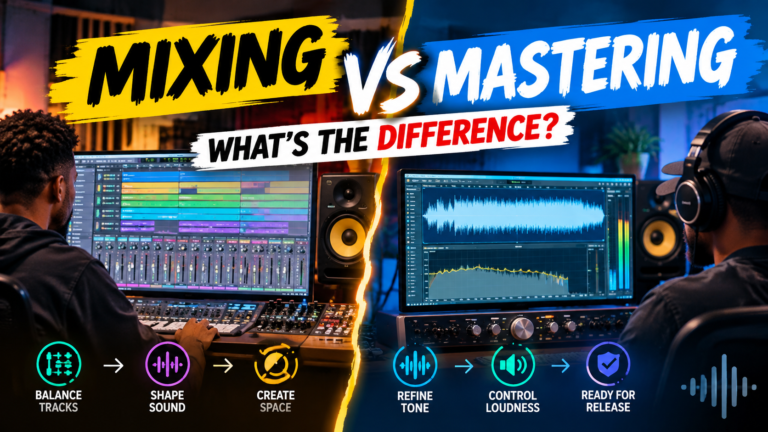
- Mixing
- Mastering
- Agreed revisions
Interestingly, these figures are broadly consistent with pricing advertised by several professional Nigerian recording studios, where complete production packages typically range from roughly ₦80,000 to over ₦300,000 depending on services, recording time, revision limits, and production quality.
However, price alone tells only part of the story.
What Actually Makes One Song Cost ₦80,000 and Another ₦250,000?
Many artists assume the price depends on the number of hours spent recording.
That has rarely been true in my studio.
The biggest factor is production complexity.
For example, an artist may begin with a simple Afrobeats record that appears straightforward. As production develops, everyone realizes the song would sound significantly better with a live saxophone, trumpet section, backup vocalists, or additional instrumental textures.
Every new creative decision introduces extra musicians, more recording sessions, additional editing, and more mixing work.
I experienced this on one project where an artist initially planned a fairly simple production. As the arrangement developed, we decided the record needed a saxophonist and a trumpeter to achieve the emotional impact the song deserved.
Those additions completely changed the production.
Naturally, they also increased the budget.
That experience taught both me and the artist an important lesson: the first version of a song is rarely the final version.
Great productions evolve.
According to industry experts, production costs continue to rise because professional studios must invest heavily in quality equipment, software, acoustically treated rooms, skilled engineers, and increasingly higher production standards demanded by streaming platforms and listeners.
What Happens After You Pay a Studio?
Many artists think recording starts when they arrive at the microphone.
For me, it starts much earlier.
I usually ask the artist to record the song as a simple WhatsApp voice note—sometimes just the chorus, sometimes the complete song.
Next, I ask for one or two reference tracks.
The purpose is not to copy another artist.
It is to understand the mood, energy, arrangement, and overall direction the artist wants.
Once I understand that vision, I typically spend up to three days building a custom instrumental.
The artist listens carefully.
If they want adjustments to the instrumentation, I revise the beat before we ever enter the studio.
Only after approving the instrumental do we schedule the recording session.
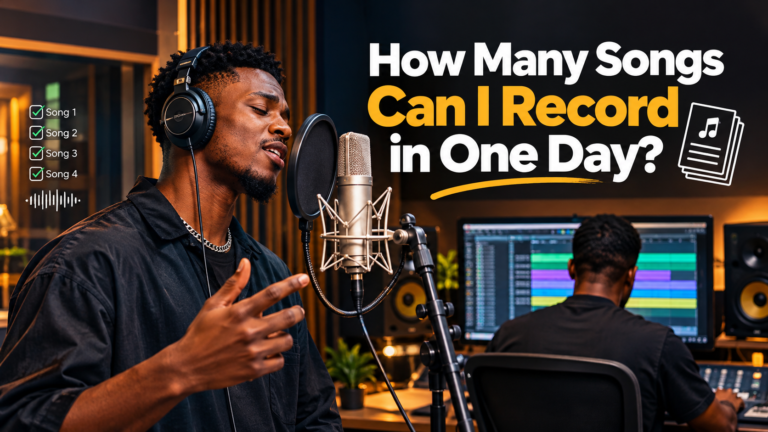
During recording, I usually capture multiple full performances rather than relying on one perfect take. Later, I carefully comp the strongest sections together to create the final vocal performance.
If external backup vocalists are required, another recording session is arranged.
Once recording finishes, I send the artist a demo and encourage them to live with it for a day or two.
Fresh ears often reveal issues that nobody noticed during recording.
Only after that approval do I begin mixing and mastering.
When everything flows smoothly, the complete production normally takes about one week.
The Biggest Misunderstanding About Recording Costs
One misconception appears repeatedly.
Artists often believe they are paying someone for a single day’s work.
That is almost never what happens.
A producer may spend several days creating the beat.
There are consultations before recording.
There is vocal editing after recording.
Mixing may require hours of careful balancing.
Mastering ensures the song translates well across streaming services, headphones, cars, clubs, and radio.
Then come revisions.
The artist usually sees only the recording session.
The producer experiences the entire production journey.
That difference explains why experienced producers often charge more.
You are paying for their judgment as much as their time.
Should You Choose the Cheapest Package?
There are situations where a lower-priced package makes perfect sense.
If you have thoroughly rehearsed your song, know exactly how you want it to sound, deliver consistent vocal performances, and are unlikely to request additional revisions, an entry-level production package can provide excellent value.
However, premium packages become worthwhile when quality matters more than speed.
Higher budgets usually allow more refinement.
There is greater flexibility.
More time can be invested in solving creative problems.
Additional revisions become possible.
The producer can stay fully engaged with your project instead of rushing toward the next session.
I have seen many artists regret choosing the cheapest option—not because the studio performed poorly, but because they later realized they wanted changes that their original budget simply did not cover.
How to Get the Best Value From Your Budget
If an artist walked into my studio today with ₦100,000, my advice would be surprisingly simple.
Don’t look for the cheapest producer.
Look for the producer who understands your vision.
A good producer will ask questions before touching the computer.
Who is your audience?
What emotion should listeners feel?
What artists inspire this record?
What is the purpose of releasing this song?
Only after understanding those answers should production begin.
When a producer genuinely understands your destination, your money goes much further.
On the other hand, choosing someone purely because they offered the lowest quote often becomes expensive later.
Many artists eventually pay another producer to redo work that should have been done properly the first time.
Cheap production can become very costly.
Final Thoughts
So, how much does it cost to record a song in Nigeria?
For most independent artists seeking commercial quality, a realistic budget falls between ₦80,000 and ₦250,000, depending on the complexity of the production, the producer’s experience, the need for live musicians, revision requirements, and the level of creative involvement.
More importantly, don’t judge value by price alone.
Judge it by the producer’s ability to understand your vision, guide your performance, solve creative problems, and deliver a record you will still be proud of years after release.
A great song is rarely the result of one recording session.
It is the result of thoughtful collaboration, careful craftsmanship, and a producer who is committed to bringing your best ideas to life.