
Whether you are considering a one-hour studio session or a multi-week music production for your project, the time required to record a song depends on many factors such as preparation, genre, performance quality, production complexity, and the goals of the artist.
Table of Contents
Introduction
One of the most common questions artists ask before booking studio time is: How long does it take to record one song?
The answer is not as straightforward as many beginners expect. A simple acoustic demo can be recorded in a few hours, while a commercial-quality release may take several days or even weeks to complete when songwriting, production, recording, editing, mixing, and mastering are included.
Understanding the recording process helps artists budget correctly, schedule studio sessions efficiently, and avoid unnecessary delays. Whether you’re a first-time singer or an experienced recording artist, knowing what affects recording time can save money and improve the final result.
In this guide, we’ll break down realistic timelines for different types of songs, explain what slows down recording sessions, and show how artists can prepare to finish projects faster.
Quick Answer: How Long Does It Take to Record One Song?
For most independent artists, recording a single song typically takes:
| Project Type | Estimated Time |
| Simple vocal recording over a finished instrumental | 1–3 hours |
| Professional vocal recording with multiple takes | 3–6 hours |
| Full song production from scratch | 1–5 days |
| Complex commercial production | Several days to several weeks |
| Recording, mixing, mastering, and revisions | 3–14 days |
The actual timeline depends heavily on preparation and the desired level of quality.
What Determines How Long a Song Takes to Record?
1. Artist Preparation
Preparation is often the biggest factor affecting studio time.
Artists who arrive knowing their lyrics, melodies, harmonies, and arrangement can complete recording sessions significantly faster than artists who are still writing during the session.
Prepared artists typically:
- Memorize lyrics
- Rehearse vocal delivery
- Know song structure
- Understand key and tempo
- Practice difficult sections beforehand
Unprepared artists often spend valuable studio time:
- Rewriting lyrics
- Learning melodies
- Adjusting song structure
- Re-recording basic sections
A well-rehearsed artist may finish recording in two hours, while an unprepared artist may require multiple sessions.
2. Type of Music Being Recorded
Different genres require different recording approaches.
Afrobeat
Modern Afrobeat productions often rely on layered vocals, ad-libs, harmonies, doubles, and vocal effects. While the instrumental may already be finished, recording all vocal layers can take several hours.
Gospel Music
Gospel recordings frequently include:
- Lead vocals
- Choir arrangements
- Background vocals
- Harmonies
- Multiple vocal stacks
This naturally increases recording time.
Hip-Hop and Rap
Rap artists may complete recording relatively quickly if lyrics are written and rehearsed. However, extensive ad-libs, doubles, and punch-ins can extend sessions.
Acoustic Music
Acoustic recordings may require live instrument recording, microphone placement, and multiple performance takes, increasing session length.
3. Recording Method
Live Recording
In live recording, musicians perform together simultaneously.
Advantages:
- Natural performance
- Faster for experienced bands
Challenges:
- Mistakes require retakes
- Greater setup requirements
Layer-by-Layer Recording
Most modern productions use overdubbing, where parts are recorded separately.
For example:
- Instrumental production
- Lead vocals
- Harmonies
- Background vocals
- Ad-libs
This approach provides greater control but requires more time.
Typical Timeline for Recording a Professional Song
Step 1: Song Preparation
Time Required: Several days to several weeks
Before entering the studio, artists often spend time:
- Writing lyrics
- Developing melodies
- Practicing vocals
- Finalizing arrangements
Although this stage happens outside the studio, it directly affects recording efficiency.
Step 2: Beat Production
Time Required: 4–20 hours
If the instrumental does not already exist, producers may need to:
- Create drums
- Build melodies
- Design sounds
- Arrange sections
- Prepare the final beat
Custom productions naturally require more time than recording over a pre-made instrumental.
Artists seeking complete production services can benefit from professional guidance through the Full Music Production Service.
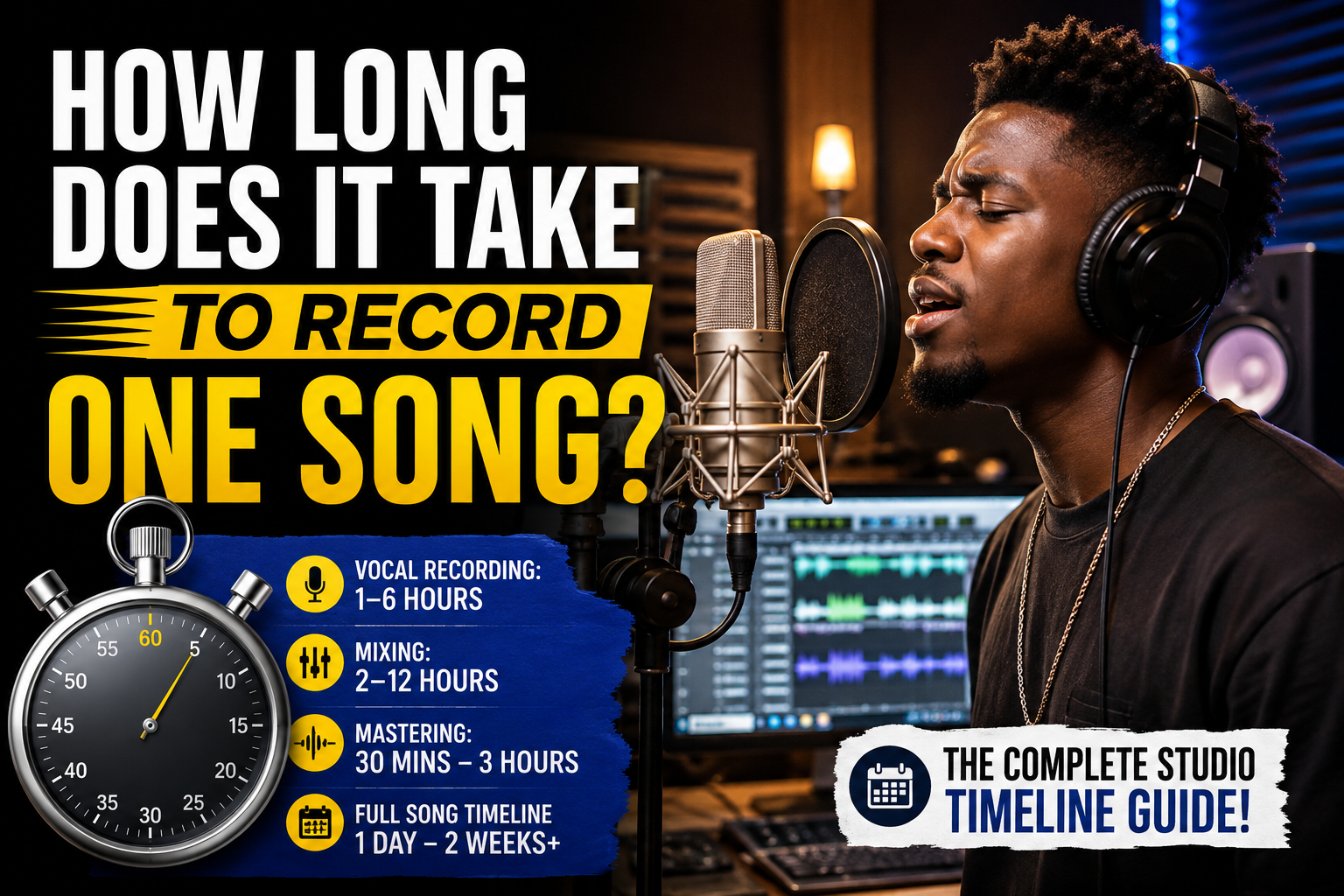
Step 3: Vocal Recording
Time Required: 1–6 hours
This stage includes:
- Session setup
- Sound checks
- Lead vocal recording
- Additional takes
- Harmonies
- Ad-libs
- Comping
For many independent artists, this is the portion they think of as “recording the song.”
A prepared singer often completes lead vocals in under two hours.
Step 4: Vocal Editing
Time Required: 1–4 hours
Editing may include:
- Timing adjustments
- Noise removal
- Breath control
- Comping multiple takes
- Pitch correction where necessary
Professional editing helps create a polished final performance.
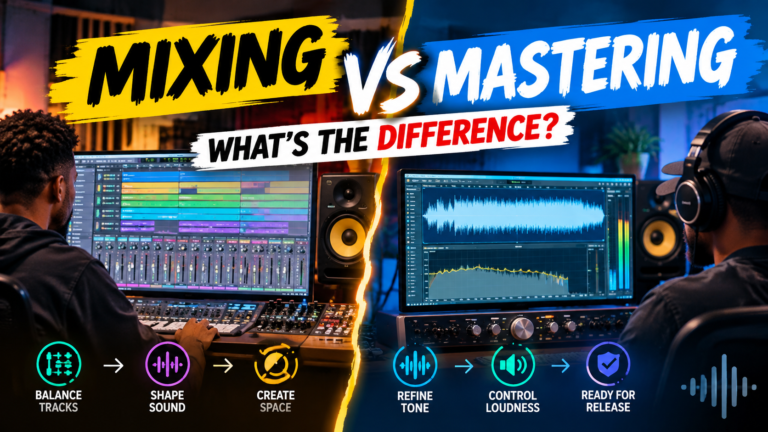
Step 5: Mixing
Time Required: 2–12 hours
Mixing involves balancing every element of the song.
Engineers typically adjust:
- EQ
- Compression
- Reverb
- Delay
- Stereo imaging
- Automation
Artists looking for professional finishing can explore Professional Mixing and Mastering Services.
Step 6: Mastering
Time Required: 30 minutes–3 hours
Mastering prepares the song for release across streaming platforms and listening devices.
The process includes:
- Loudness optimization
- Final tonal balance
- Format preparation
- Quality control checks
Why Some Songs Take Much Longer
Multiple Revisions
Many projects are delayed not by recording itself but by revision requests.
Common examples include:
- Changing vocal effects
- Re-recording verses
- Adjusting harmonies
- Modifying arrangements
- Replacing instrument sounds
Each revision adds additional production time.
Feature Artists
Collaborations often extend timelines because:
- Scheduling becomes more difficult
- Additional vocal sessions are required
- Approval from multiple parties is needed
A song featuring several artists may take significantly longer to complete than a solo release.
Perfectionism
Striving for quality is important.
However, excessive retakes can become counterproductive.
Many artists spend hours trying to perfect a vocal that was already strong enough for release. Experienced producers know when a performance captures the right emotion, even if it is not technically flawless.
How to Record a Song Faster
👉Learn Your Lyrics Thoroughly
Artists who know every word reduce mistakes and save valuable studio time.
👉Practice With the Instrumental
Rehearsing with the exact beat helps identify problem areas before recording begins.
👉Warm Up Before Arriving
A vocal warm-up before the session improves performance and reduces unnecessary retakes.
👉Organize Reference Tracks
Bring examples of songs that match your desired sound.
This helps engineers understand your vision quickly.
👉Trust Your Engineer
Constantly stopping sessions to analyze every take can slow progress dramatically.
Record multiple takes first, then evaluate afterward.
Common Mistakes That Waste Studio Time
Writing Lyrics During Recording
Creative inspiration can happen in the studio, but writing entire sections during paid studio time often becomes expensive.
Arriving Late
Late arrivals shorten productive recording time and disrupt schedules.
Recording Without a Plan
Artists should know:
- Song key
- Tempo
- Structure
- Vocal approach
before entering the booth.
Ignoring Vocal Health
Fatigue can reduce performance quality and increase retakes.
Proper rest and hydration help sessions run smoothly.
Related Question: Can a Song Be Recorded in One Day?
Yes.
Many songs are successfully recorded in a single day, particularly when:
- The beat is already finished
- Lyrics are complete
- The artist is prepared
- The session focuses only on vocals
However, recording, editing, mixing, mastering, and revisions may still continue after the session ends.
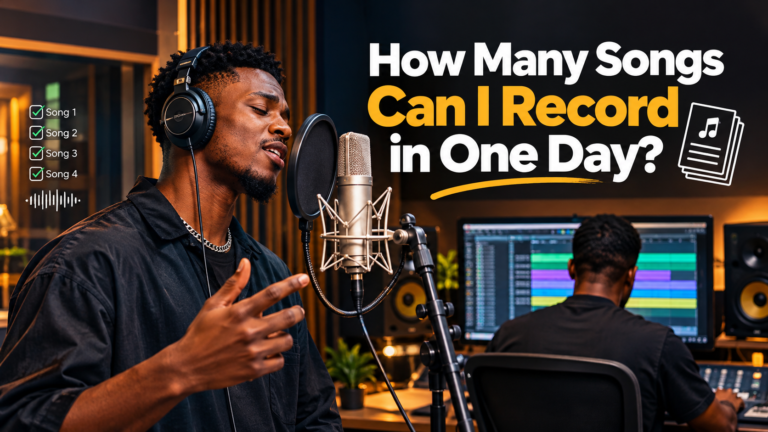
Related Question: How Many Songs Can Be Recorded in One Day?
The answer depends on complexity.
A highly prepared artist may record:
- 3–5 simple songs in a day
- 1–3 professionally layered songs in a day
Quality should always take priority over quantity.
Key Takeaways
- Most vocal recording sessions take between one and six hours.
- Full song production can require several days or weeks.
- Preparation is the single biggest factor affecting recording speed.
- Layered genres such as Afrobeat and Gospel often require additional recording time.
- Mixing and mastering frequently take longer than artists expect.
- Proper planning can reduce costs and improve recording quality.
Next Steps for Artists
If you’re preparing to record your next release, start by rehearsing thoroughly before booking studio time. Enter the session with finalized lyrics, a clear artistic vision, and realistic expectations for production timelines.
Whether you need vocal recording, beat production, mixing, mastering, artist development, or distribution support, working with an experienced studio team can dramatically improve both efficiency and results.
Learn more about professional recording services through the Session Recording Service or explore additional resources on the CFATMUSIC STUDIO BLOG.
Conclusion
So, how long does it take to record one song?
For a prepared artist recording over a finished instrumental, the answer may be just a few hours. For a fully produced commercial release involving custom production, vocal layering, mixing, mastering, and revisions, the process can extend to several days or even weeks.
The good news is that preparation, organization, and collaboration with skilled producers and engineers can dramatically shorten the timeline while improving the quality of the final record. The more prepared you are before stepping into the studio, the faster—and better—your song is likely to be.