

Table of Contents
Releasing music in 2026 is no longer as simple as finishing a song, uploading an MP3 to a distributor, and posting “OUT NOW” on Instagram. A professional release involves music production, rights ownership, metadata, distribution, artist profiles, playlist pitching, content, promotion, and post-release strategy.
For independent artists, especially those building careers from Nigeria and other emerging music markets, the biggest mistake is often treating the release date as the starting point. It is actually the end of a preparation process.
The correct approach is to prepare the recording and business side first, deliver the music early enough, build anticipation, pitch the unreleased song where appropriate, and then use the weeks after release to turn streams into actual fans.
This guide explains how to release music correctly in 2026, from the finished master to the first weeks after release.
What Is the Correct Way to Release Music in 2026?
The correct way to release music in 2026 is to treat a release as a campaign rather than a single upload.
A professional release generally follows this sequence:
Create → Clear rights → Finalize master → Prepare metadata and artwork → Choose distributor → Deliver early → Claim artist profiles → Pitch unreleased music → Build pre-release content → Release → Promote → Monitor data → Continue marketing.
The exact timeline can vary depending on the distributor, DSP requirements, project type, and whether the song is a single, EP, or album.
The important principle is simple: do not finish the song today and expect the release to happen tomorrow.
1. Finish the Music Before You Announce the Release
The first stage is obvious, but artists often rush through it.
Before selecting a release date, make sure the actual recording is finished.
That means:
- Final vocal recording
- Vocal editing
- Production
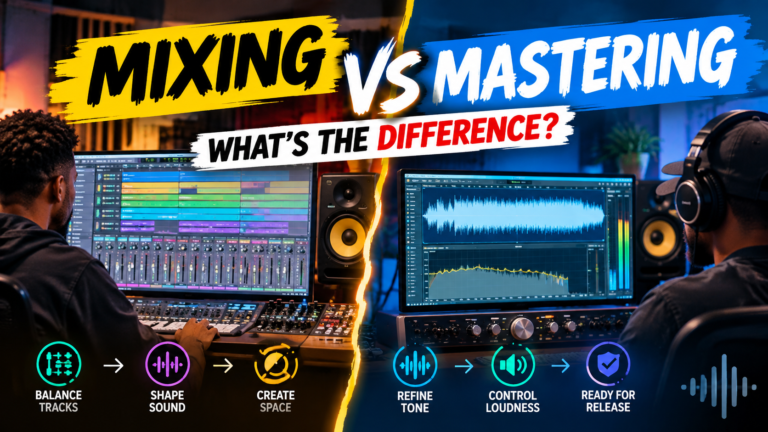
- Mixing
- Mastering
- Final quality control
- Correct song arrangement
- Final lyrics
- Final songwriting and production credits
- Confirmation that samples, beats, interpolations and other third-party materials are cleared
If another producer created the beat, don’t simply assume that uploading the song means everything is legally settled.
You should know who owns what.
For example, if an artist, producer and songwriter worked on a record, establish the agreed ownership or royalty splits before the song starts generating money.
A simple split sheet can prevent a complicated argument months later.
Your master should also be properly checked
Listen to the final master on multiple systems—not only your studio monitors or headphones.
Check:
- Studio monitors
- Headphones
- Earphones
- Car speakers
- Phone speaker
- Bluetooth speaker
- Low-volume playback
This is particularly important for Afrobeat and other rhythm-heavy music where the relationship between vocals, bass, kick and percussion can change dramatically between playback systems.
If you need professional assistance with the final stage, you can consider Cfatmusic Studios’ Professional Mixing & Mastering Service before sending the master to your distributor.
2. Make Sure You Actually Own or Control the Rights
One of the biggest mistakes independent artists make is thinking distribution automatically equals copyright protection.
It doesn’t.
Distribution gets your recording delivered to digital platforms. It does not magically resolve ownership disputes.
Before release, identify the different rights involved.
There can be rights in:
- The sound recording (master)
- The underlying musical composition
- Lyrics
- Production
- Featured performances
- Samples
- Interpolations
- Artwork
- Music videos
The International Standard Recording Code (ISRC) is particularly important for identifying the specific sound recording. IFPI explains that an ISRC identifies sound recordings and music videos—not compositions or lyrics.
If you’re self-releasing, the official ISRC system also provides a route for obtaining an ISRC and registering the recording information.
What about copyright registration in Nigeria?
For Nigerian creators, the Nigerian Copyright Commission provides an official copyright registration system and states that registration can provide the statutory presumptions available to registered works under the relevant law.
That does not mean registration replaces good contracts.
You should still document agreements with:
- Producers
- Songwriters
- Featured artists
- Labels
- Managers
- Other rights holders
Paperwork is part of the music business.
3. Prepare Your Metadata Before Uploading
Metadata is one of the least exciting parts of releasing music—and one of the most important.
Metadata tells digital platforms what your song actually is.
It can include:
- Artist name
- Featuring artist
- Song title
- Version information
- Release date
- Genre
- Language
- Track number
- Songwriters
- Producers
- Copyright information
- Lyrics
- ISRC
- Release identifier such as UPC/EAN where applicable
Apple Music specifically emphasizes the importance of accurate metadata because listeners use this information to discover music, while incorrect artist names, titles and release dates can cause problems with your release and promotion.
Be extremely careful with artist names
Suppose your artist name is:
RICHOCO
Don’t upload one release as:
RICH OCO
and another as:
Richoco
and another as:
RICHOCO OFFICIAL
unless there is a deliberate branding reason and the platform supports it appropriately.
Inconsistent metadata can create artist-profile and catalog-management problems.
The same applies to featuring artists.
Before uploading, create one master document containing the exact information that will be used across your distributor, social media, YouTube, press materials and promotional graphics.
4. Create Professional Cover Artwork
Your artwork is part of the release—not an afterthought.
Prepare the cover according to the current technical requirements of your distributor and target platforms.
Your artwork should:
- Clearly represent the song
- Match your artist identity
- Avoid misleading information
- Use accurate artist and title information where required
- Avoid unauthorized logos or third-party intellectual property
- Meet your distributor’s current dimensions and file specifications
Don’t design artwork based on an old screenshot from another artist.
Distribution platforms update their requirements, so always check your distributor’s current specifications before submitting.
Apple Music also provides official guidance around cover art and release preparation.
5. Choose Your Distributor Carefully
In 2026, independent artists have many digital distribution options.
But the cheapest distributor isn’t automatically the best distributor for your career.
A distributor can become an important part of your release infrastructure.
Apple Music explains that distributors manage relationships between artists and streaming services and can also handle aspects of metadata, delivery, streaming data and financial information.
When comparing distributors, look beyond the headline price.
Consider:
- Distribution fees
- Revenue share
- Payment terms
- Withdrawal methods available to you
- YouTube Content ID availability
- Analytics
- Royalty reporting
- Customer support
- Takedown policies
- Catalog retention
- Lyrics delivery
- Release credits
- Store coverage
- Monetization options
- Rights management tools
Also check whether the distributor supports the platforms that matter to your audience.
Apple maintains an official directory of distribution partners and identifies distributors that support additional capabilities such as lyrics, credits, motion artwork and analytics.
6. Don’t Upload Your Song at the Last Minute
This is one of the most important changes in mindset for independent artists.
Your release date should be a deadline, not your upload date.
Give your distributor enough time to process and deliver the release according to its current requirements.
A practical approach is to have the finished release delivered several weeks before your intended public release date, rather than attempting to submit it a few days before.
Why?
Because problems can occur with:
- Artwork
- Metadata
- Artist mapping
- Audio
- Copyright
- Explicit-content information
- Release dates
- Duplicate recordings
- Store delivery
- Lyrics
- Distributor review
If something goes wrong 48 hours before your release, you have very little room to fix it.
If you discover the problem three weeks earlier, you have options.
7. Claim Your Artist Profiles Early
Once your distributor has delivered your music, make sure you control your official artist profiles on major platforms.
At minimum, think about:
- Spotify for Artists
- Apple Music for Artists
- YouTube
- YouTube Music
- Other important DSP artist dashboards relevant to your market
Spotify says artists can use Spotify for Artists to customize their profile, view analytics and pitch unreleased music to playlist editors. Spotify also recommends giving yourself at least seven days before release to pitch an unreleased song.
That makes your distributor timeline important.
You don’t want to discover on release day that you don’t have access to your artist profile.
8. Pitch the Song Before It Comes Out
Playlist pitching should happen before release, not after.
For Spotify, the platform allows artists to pitch an unreleased song through Spotify for Artists. Spotify recommends submitting the pitch at least seven days before the release date.
Your pitch should accurately describe the record.
Think about:
- Genre
- Mood
- Instrumentation
- Location/culture
- Story behind the song
- Whether it is a collaboration
- Why the record fits your current artistic direction
Do not write:
“This is the biggest song in Africa. Please put me on your biggest playlist.”
That doesn’t help an editor understand the record.
Instead, explain what makes the music distinctive and where it naturally fits.
Also remember that playlist pitching is not a guarantee of placement.
Never pay someone who claims they can guarantee editorial playlist placement.
9. Build the Release Campaign Before Release Day
This is where many artists fail.
They upload the song, wait until it becomes available, then post:
“OUT NOW!!! STREAM NOW!!!”
That’s not a campaign.
A release campaign should give people reasons to care before the song arrives.
For a single, you might build content around:
3–4 weeks before release
Begin preparing:
- Cover reveal
- Artist announcement
- Behind-the-scenes content
- Studio footage
- Song story
- Short performance clips
- Teasers
- Pre-save or pre-add campaign where appropriate
- Press outreach
- DJ outreach
- Influencer/creator outreach
- Content creator strategy
1–2 weeks before release
Increase the frequency of:
- Song snippets
- Reels
- TikToks
- Shorts
- Performance videos
- Lyric snippets
- Storytelling content
- Countdown content
Final few days
Create urgency.
But don’t reveal the entire song through ten different teasers.
The goal is curiosity.
10. Don’t Depend on One Social Media Post
Your song should generate multiple pieces of content.
For example, one song could produce:
Content 1: Studio creation story
Content 2: 15-second hook
Content 3: Artist performance
Content 4: “What inspired this song?”
Content 5: Behind-the-scenes recording footage
Content 6: Producer breakdown
Content 7: Lyric video
Content 8: Fan reaction
Content 9: Acoustic/live version
Content 10: Release-day announcement
This is particularly useful for independent artists who don’t have huge advertising budgets.
Instead of asking:
“How do I promote my song?”
ask:
“How many different reasons can I give people to discover this song?”
11. Release Day Is Only the Beginning
When the song goes live, don’t disappear.
Your release-day checklist should include:
- Verify the song appears correctly
- Check artist profile
- Check title and artwork
- Check credits
- Check lyrics where available
- Check links
- Test your smart link
- Publish your main announcement
- Upload short-form content
- Engage with comments
- Send the release to your existing audience
- Contact DJs, media and relevant curators
- Monitor early audience response
Apple Music for Artists provides artists with tools for release promotion, including promotional assets, links and milestone-sharing features.
The goal isn’t simply to announce:
“My song is out.”
The goal is to create repeated opportunities for people to hear it, remember it, share it and eventually become fans.
12. Your YouTube Strategy Should Be Part of the Release
Don’t treat YouTube as somewhere you upload the music video two weeks later.
Your YouTube presence can become part of your release ecosystem.
Depending on your resources, you might release:
- Official audio
- Lyric video
- Visualizer
- Official music video
- Performance video
- Behind-the-scenes video
- Producer breakdown
- Acoustic performance
- Shorts
You should also work toward having a properly organized artist presence on YouTube.
YouTube’s Official Artist Channel system can consolidate an artist’s music presence and provide features such as a Releases section and artist analytics. Eligibility includes having at least one official music release delivered through a distributor or label, along with other requirements.
13. Don’t Forget Lyrics and Credits
Lyrics are increasingly important to the modern music experience.
Listeners encounter songs through:
- Streaming
- Search
- Social media
- Shazam
- Lyric features
- User-generated videos
- Playlists
- Short-form content
Apple specifically allows artists to manage lyrics through Apple Music for Artists, while accurate credits and metadata can help identify the people involved in creating the recording.
So prepare your lyrics properly.
Don’t wait until somebody asks:
“Please send the lyrics.”
Have them ready before the release.
14. The First 30 Days After Release Matter
A common mistake is assuming that a song has failed because it didn’t explode during the first 24 hours.
Music careers generally don’t work that way.
After release, look at the available data.
Ask:
- Where are listeners coming from?
- Which content is driving people to the song?
- Which cities or countries are responding?
- Are people saving the song?
- Are listeners returning?
- Which section of the song generates the strongest reaction?
- Are people sharing it?
- Are new listeners becoming followers?
- Which platform is producing the best results?
Then adjust your marketing.
If your chorus is getting the strongest response, create more content around it.
If a particular performance video outperforms the official announcement, make another performance-based piece.
The data should influence your next move.
15. Don’t Manipulate Streams
This deserves special attention.
Avoid services promising:
- Guaranteed Spotify streams
- Guaranteed editorial playlists
- Guaranteed millions of views
- “Real” streams for a fixed price
- Bot-generated engagement
Artificial activity can damage an artist’s long-term career rather than build it.
Your objective isn’t simply to increase a number on a dashboard.
The objective is to build real listeners who return to your music.
One thousand genuine fans who repeatedly listen, attend shows, buy products, share your music and support future releases can be more valuable to a developing artist than an inflated streaming number.
16. A Better 2026 Release Timeline
Here is a practical framework for an independent single.
| Period | Main objective |
| 4–6+ weeks before | Finish recording, mixing, mastering and rights paperwork |
| 3–4 weeks before | Prepare artwork, metadata and distribution |
| 2–4 weeks before | Deliver to distributor and begin campaign |
| 2–3 weeks before | Prepare content and promotional materials |
| 1–2 weeks before | Increase teasers and audience engagement |
| At least 7 days before | Submit Spotify editorial pitch where eligible |
| Release week | Activate social, media, creator and fan campaigns |
| Release day | Verify platforms, publish content and engage |
| Week 1 | Monitor performance and audience response |
| Weeks 2–4 | Continue content, promotion and outreach |
| After 30 days | Analyze results and plan the next release |
The exact schedule should be adapted to your distributor’s delivery requirements and your campaign size.
Common Music Release Mistakes to Avoid in 2026
1. Releasing immediately after mastering
Give yourself preparation time.
2. Using inconsistent artist names
Keep your metadata consistent across platforms.
3. Waiting until release day to promote
Build anticipation beforehand.
4. Forgetting producer and songwriter credits
Document your collaborators before release.
5. Uploading without checking rights
Clear samples, beats, features and other third-party materials.
6. Ignoring artist dashboards
Claim and manage your profiles.
7. Pitching too late
For Spotify, the official recommendation is at least seven days before release.
8. Treating streaming numbers as the entire career
Build an audience, not just a statistic.
9. Stopping promotion after one week
Some songs need repeated exposure before they connect.
10. Releasing without a next step
Your single should lead somewhere.
The next release.
The next video.
The next live performance.
The next email subscriber.
The next fan.
The Real Goal of a Music Release
The purpose of releasing a song isn’t simply to put an audio file on Spotify, Apple Music, YouTube Music and other platforms.
The real objective is to move someone through a journey:
Stranger → Listener → Follower → Fan → Supporter → Customer → Community
That changes how you approach the release.
Your music is the product.
Your content creates discovery.
Your artist profile creates credibility.
Your story creates connection.
Your consistency creates familiarity.
And your business systems turn attention into a sustainable career.
For artists who need help developing the record before distribution, Full Music Production Service at Cfatmusic Studios can cover the production side, while Cfatmusic Studios’ Session Recording Service is relevant when the recording itself is still being completed.
Artists who need broader career guidance can also explore Artist Development at Cfatmusic Studios, while Music Distribution at Cfatmusic Studios is directly relevant to the delivery stage.
Key Takeaways
If you’re releasing music in 2026, remember these principles:
- Finish the music properly before announcing it.
- Clear ownership and collaborator agreements before release.
- Prepare accurate metadata.
- Use the correct ISRC and other release identifiers.
- Choose your distributor based on your actual needs—not just price.
- Deliver your music early.
- Claim your artist profiles.
- Pitch eligible unreleased music before release.
- Create promotional content before release day.
- Treat release day as the beginning of the campaign, not the end.
- Study your audience data after release.
- Avoid artificial streaming and guaranteed-playlist schemes.
- Keep promoting after the first week.
- Use every release to build the audience for the next one.
Final Thoughts
The correct way to release music in 2026 is to stop thinking like someone who is simply uploading a song and start thinking like someone launching a music product.
A professional release combines creative quality with business preparation.
The song needs to sound right. The rights need to be clear. The metadata needs to be accurate. The distributor needs enough time. Your artist profiles need to be ready. Your promotional content needs to exist before the release. And once the music is live, you need to keep giving people reasons to listen.
You don’t need a major-label budget to follow this process.
You need planning, consistency, accurate information and enough lead time.
That’s what turns a release from “my song is out” into an actual career-building campaign.