
Table of Contents
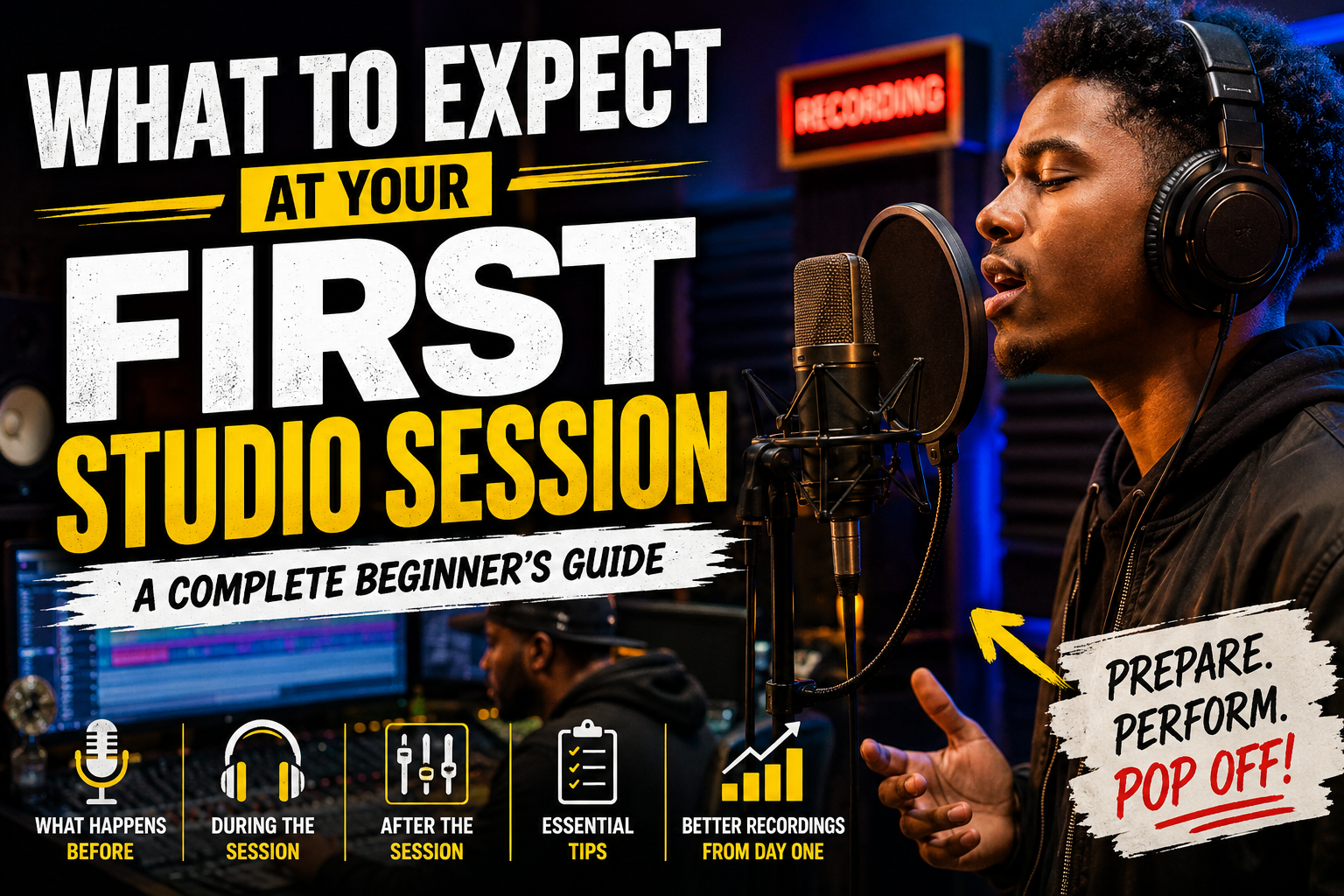
Whether you’re recording your very first song or finally stepping into a professional recording studio after years of writing music, your first studio session can feel exciting, intimidating, and overwhelming at the same time.
Many artists arrive expecting to simply sing into a microphone and leave with a finished hit. The reality is different. A productive recording session requires preparation, communication, patience, and realistic expectations.
Understanding what to expect at your first studio session will help you perform better, save money, avoid unnecessary mistakes, and walk away with recordings you’re genuinely proud of.
Why Your First Studio Session Matters
Your first session sets the tone for how you’ll approach recording throughout your music career.
Professional studios are designed to capture your best performance—not to create one from nothing.
While modern production tools can correct pitch, timing, and other imperfections, they cannot replace genuine emotion, preparation, or confidence.
Artists who prepare well usually:
- Finish recording faster
- Spend less money
- Feel less nervous
- Deliver stronger performances
- Build better relationships with producers and engineers
What Happens Before You Even Arrive?
One of the biggest misconceptions is that preparation starts when you enter the studio.
In reality, the recording process begins days—or even weeks—before your session.
Know Your Song Completely
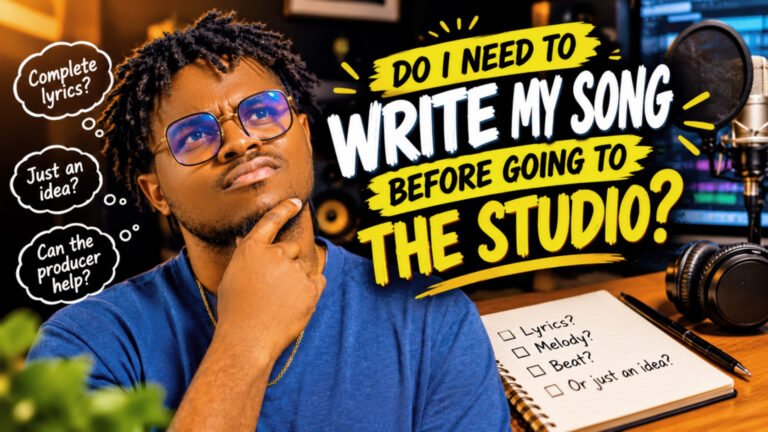
Don’t rely on reading lyrics from your phone for the first time.
Before recording, you should know:
- Every lyric
- Song structure
- Verse order
- Chorus timing
- Ad-libs
- Harmonies
- Breathing points
The more familiar you are with your song, the more emotional and natural your performance becomes.
Practice with the Instrumental
Record yourself rehearsing over the exact instrumental you’ll use in the studio.
This helps identify:
- Weak lyrics
- Timing issues
- Breath control problems
- Difficult vocal passages
Listening back honestly often reveals issues you won’t notice while performing.
Rest Your Voice
Avoid shouting, excessive talking, or late-night parties before recording.
Good vocal health includes:
- Drinking enough water
- Getting quality sleep
- Avoiding excessive alcohol
- Avoiding smoking immediately before recording
Your voice is an instrument, and professional musicians treat it that way.
Arriving at the Studio
Most professional studios begin with a brief discussion before recording starts.
The producer or engineer may ask questions like:
- What genre is this?
- Who are your musical influences?
- What sound are you aiming for?
- Do you have reference songs?
- Are there special vocal effects you want?
Reference tracks are incredibly useful because they help everyone understand the artistic direction without guessing.
Getting Comfortable in the Recording Booth
The first few minutes often feel strange.
You’ll probably wear closed-back headphones while standing in front of a large condenser microphone.
You may hear:
- Your own voice
- The instrumental
- The producer speaking through the headphones
Almost everyone feels uncomfortable hearing their own voice at first.
That’s completely normal.
Most artists relax after recording a few takes.
Expect Multiple Takes
Many beginners imagine recording an entire song perfectly in one performance.
Professional recordings rarely happen that way.
Instead, producers usually record multiple takes of every section.
For example:
Verse 1:
- Take 1
- Take 2
- Take 3
Chorus:
- Take 1
- Take 2
- Take 3
Later, the engineer combines the strongest parts of each performance into one final vocal. This process is called comping.
Recording multiple takes gives you options instead of forcing perfection on the first attempt.
Don’t Expect Instant Perfection
Professional artists often spend hours recording vocals for a single song.
Even experienced singers:
- Miss notes
- Forget lyrics
- Lose timing
- Crack their voices
- Need additional takes
The goal isn’t perfection.
It’s capturing the most believable emotional performance.
Understanding the Producer’s Role
A good producer does far more than press the record button.
They may help you:
- Improve melody ideas
- Change vocal delivery
- Rewrite awkward lyrics
- Suggest harmonies
- Improve timing
- Improve song arrangement
- Capture more emotional performances
Treat their feedback as collaboration rather than criticism.
The best recordings usually come from teamwork.
The Engineer Will Focus on Sound
While the producer focuses on performance, the recording engineer concentrates on technical quality.
They monitor:
- Microphone placement
- Recording levels
- Background noise
- Audio quality
- Headphone mix
- Session organization
This allows you to focus on performing instead of worrying about equipment.
Recording Isn’t Mixing
One common misunderstanding is expecting a finished commercial release immediately after recording.
Recording is only one stage.
Most songs go through:
- Recording
- Vocal editing
- Comping
- Pitch correction (when appropriate)
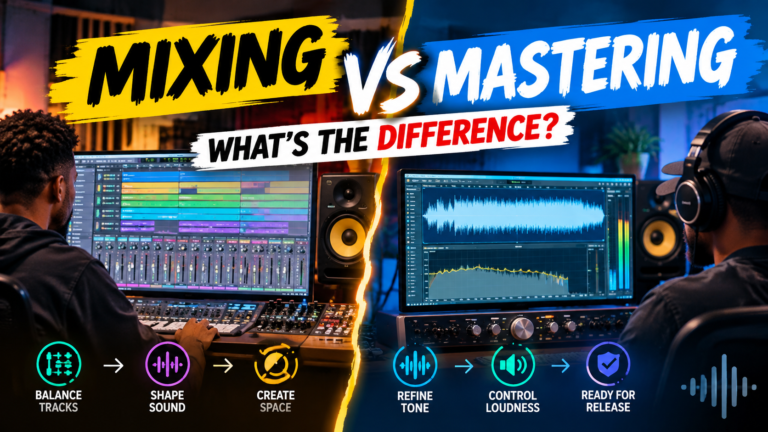
- Mixing
- Mastering
Each stage improves the song in different ways.
If you’re planning to release your music commercially, professional mixing and mastering are essential. Learn more about Professional Mixing & Mastering.
Be Open to Creative Changes
Sometimes your original vision changes during recording.
Maybe:
- A chorus works better one octave higher.
- A verse feels too long.
- A harmony creates more excitement.
- A bridge needs rewriting.
Great producers adapt instead of forcing ideas that aren’t working.
Flexibility often leads to stronger songs.
Studio Etiquette Every Artist Should Know
Professional behavior makes sessions smoother for everyone.
Good studio etiquette includes:
- Arrive on time.
- Bring water.
- Silence your phone.
- Respect studio equipment.
- Listen when the producer is giving feedback.
- Avoid bringing unnecessary guests.
- Stay focused.
Friends can sometimes become distractions instead of support.
Common Mistakes First-Time Artists Make
Recording Without Practice
The studio isn’t the best place to learn your own song.
Practice beforehand.
Expecting Technology to Fix Everything
Modern software helps, but it cannot replace emotion, rhythm, confidence, or musicality.
Ignoring Feedback
Sometimes producers notice issues that artists can’t hear themselves.
Be willing to experiment.
You can always compare versions later.
Rushing the Session
Trying to finish too quickly often leads to more expensive revisions later.
Quality usually saves money in the long run.
Questions You Should Ask Before Booking
Before scheduling a session, ask:
- How much does recording cost?
- How many revisions are included?
- Does the session include mixing?
- Does it include mastering?
- How long is the session?
- Will I receive the raw vocal files?
- What file formats are included?
Clear expectations prevent misunderstandings.
If you’re only looking to capture vocals, see the Session Recording Service. If you need a song built from scratch, explore the Full Music Production Service.
What Should You Bring to Your First Studio Session?
Prepare a simple checklist:
- Lyrics (printed or offline)
- Instrumental or beat
- Phone charger
- Water
- Light snacks
- Notebook
- USB drive or external storage (if requested)
- Reference songs
- Positive attitude
The less time spent searching for files, the more time you have to create.
After the Recording Session
Your work isn’t finished once recording ends.
Depending on your project, the next steps may include:
Mixing
Balancing vocals and instruments to create a polished, professional sound.
Mastering
Preparing the final version for streaming services, downloads, radio, and other playback systems.
Distribution
Once your music is complete, you’ll need to release it to platforms like Spotify, Apple Music, and YouTube Music. Professional Music Distribution can simplify this process.
If you’re serious about building a long-term music career, Artist Development can help strengthen your branding, performance skills, and career strategy.
Frequently Asked Questions
How long does a first studio session take?
Most first sessions last between two and six hours, depending on the number of songs, the artist’s preparation, and the recording workflow.
Can I record if I have no studio experience?
Absolutely. Professional studios work with beginners regularly. Preparation and a willingness to learn are more important than prior experience.
Should I memorize my lyrics?
Yes. While having a backup copy is helpful, memorizing your lyrics allows you to focus on emotion and delivery instead of reading from a screen.
Will my voice sound different in the studio?
Probably. Hearing your recorded voice for the first time surprises many people because it’s more accurate than what you hear while speaking or singing.
Do I need my own beat?
Usually, yes. Unless you’ve booked a full production package, most recording sessions require you to bring your own instrumental.
Key Takeaways
- Preparation is the biggest factor in a successful recording session.
- Practice your song before entering the studio.
- Expect multiple takes rather than one perfect performance.
- Producers improve performances, while engineers ensure technical quality.
- Recording is only one step in creating a release-ready song.
- Stay open to feedback and creative changes.
- Professional behavior makes recording smoother and more enjoyable.
Your Next Steps
If this is your first recording experience, don’t focus on perfection. Focus on preparation, communication, and delivering an honest performance.
The best studio sessions aren’t defined by flawless takes—they’re defined by steady progress, collaboration, and a clear vision for the music you’re creating.
Before booking, discuss your goals with the studio so everyone understands the project, timeline, and deliverables. If you’re still planning your release, the resources on the CFATMUSIC Studios Blog and the main CFATMUSIC Studios website can help you prepare for every stage of your music journey.