

Table of Contents
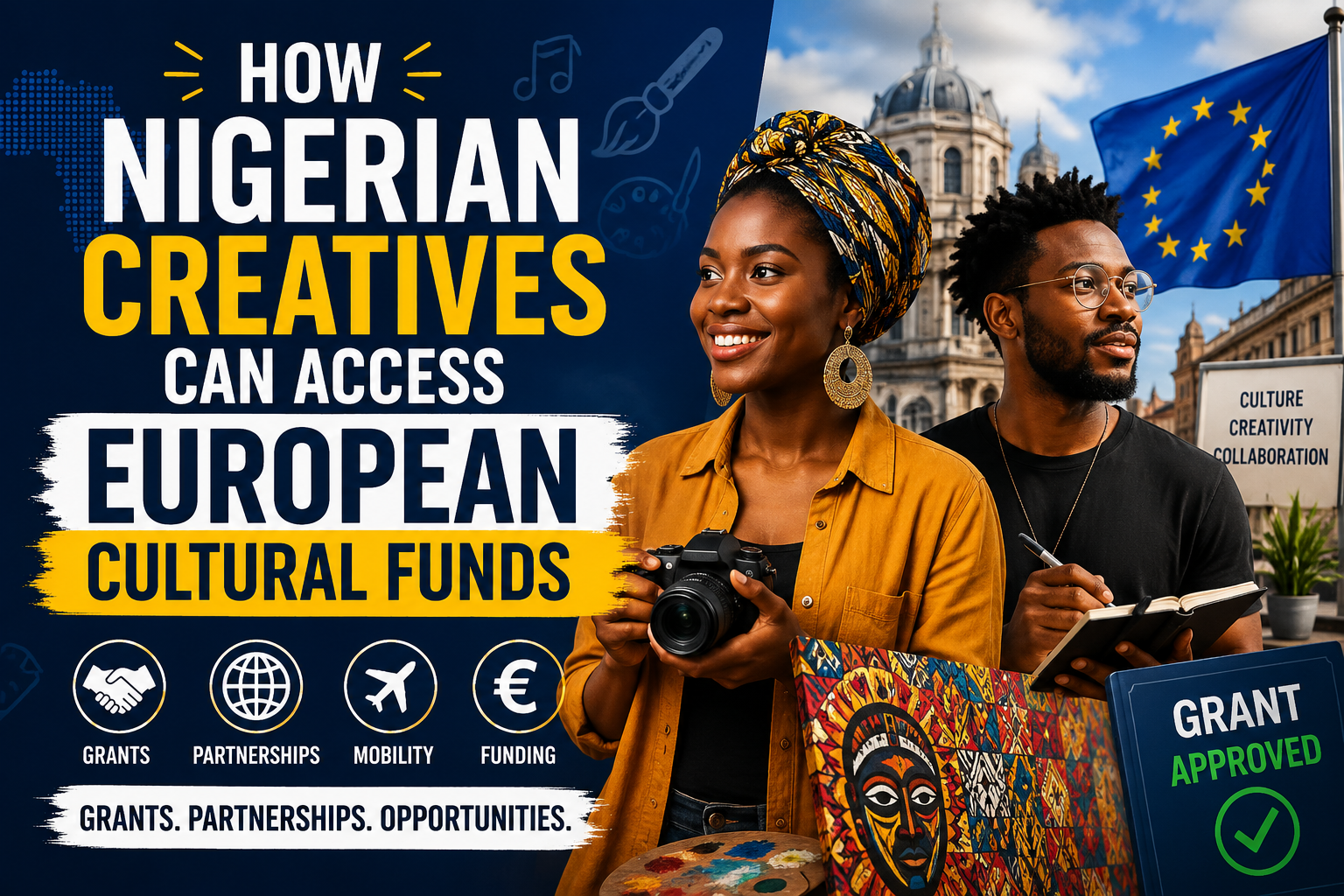
Many talented Nigerian artists, filmmakers, musicians, writers, designers, and cultural entrepreneurs still believe that European funding is reserved for organizations based in Europe. In reality, many funding programmes actively encourage collaboration with African creatives and continue to invest in projects that promote cultural exchange, innovation, and sustainable creative businesses. As a result, understanding how Nigerian creatives can access European cultural funds has become increasingly important for professionals who want to expand internationally.
European cultural funding has also evolved beyond traditional arts grants. Today, many programmes support digital creativity, music, cultural heritage, festivals, film production, creative entrepreneurship, artist mobility, and international collaborations. According to UNESCO, 2026, culture remains significantly underfunded globally despite its growing contribution to employment, digital innovation, and sustainable development. UNESCO also notes that digital revenues now account for 35% of creators’ income worldwide, highlighting the importance of international funding opportunities. [https://www.unesco.org] (UNESCO)
At the same time, competition has become stronger. Successful applicants usually demonstrate clear project planning, international partnerships, measurable impact, and financial accountability. Rather than simply asking for money, they present ideas that create lasting cultural value while strengthening cooperation between Africa and Europe.
Understanding Why Nigerian Creatives Can Access European Cultural Funds
Meanwhile, many European cultural programmes are designed to encourage cross-border cooperation instead of limiting participation to European organizations alone. Several initiatives specifically encourage partnerships with African institutions because cultural diplomacy has become an important part of European international cooperation.
Moreover, one of the biggest opportunities comes through the Africa-Europe Partnerships for Culture programme. Implemented by organizations including the Goethe-Institut, UNESCO, Expertise France, Institut Français, and EUNIC Global, the initiative represents a €30 million investment supporting collaboration between Sub-Saharan Africa and Europe. The programme places African artists at the centre of project development rather than treating them as secondary partners. [https://www.goethe.de] (Goethe-Institut)
In addition, Nigeria belongs to the West African component of the programme, which runs from 2025 to 2028. The initiative supports festival organizers, cultural institutions, artists, and creative professionals through training, networking, international promotion, and partnership building. According to the Goethe-Institut Nigeria, the programme aims to strengthen cultural cooperation across 15 West African countries while increasing international visibility for creative professionals. [https://www.goethe.de] (Goethe-Institut)
Likewise, the long-running ACP-EU Culture Programme demonstrates how European funding has already benefited African creatives. According to UNESCO, the programme has supported hundreds of cultural and creative industry projects across ACP countries while financing more than 140 film, documentary, and television productions. Many beneficiaries also received professional training, organizational development support, and international networking opportunities that extended beyond the initial grant period. [https://www.unesco.org] (UNESCO)
Practical Ways Nigerian Creatives Can Access European Cultural Funds Successfully
However, funding rarely goes to applicants who simply submit an interesting idea. European funders usually invest in projects that demonstrate preparation, collaboration, and measurable impact.
Consequently, one of the most effective approaches involves building partnerships with European organizations before funding calls open. Many Creative Europe cooperation projects require international collaboration, making networking just as important as writing a strong proposal. Although Nigerian organizations cannot always apply directly under every Creative Europe funding stream, they frequently participate through eligible partnerships depending on each call’s rules. According to the European Commission’s Culture and Creativity portal, cooperation projects continue to support international cultural partnerships alongside mobility, literary translation, heritage, and cultural networks. [https://culture.ec.europa.eu] (Culture and Creativity)
Moreover, applicants should carefully match their projects to each programme’s objectives instead of trying to force one proposal into multiple funding opportunities. A music production project, for example, may fit a cultural exchange programme better than a heritage preservation initiative.
Meanwhile, strong documentation also makes a significant difference. European evaluators often expect applicants to present realistic budgets, detailed timelines, risk assessments, partnership agreements, audience development plans, and evidence of previous work. A creative portfolio alone rarely secures funding without demonstrating sound project management.
In addition, many successful Nigerian organizations begin with smaller mobility grants, exchange programmes, or residency opportunities before applying for larger collaborative projects. These early experiences help establish credibility, build international relationships, and strengthen future applications.
Common Funding Opportunities and Lessons from Real Programmes
Meanwhile, mobility programmes continue to create valuable entry points for individual artists. Culture Moves Europe, funded by the European Union and implemented by the Goethe-Institut, provides grants that allow artists and cultural professionals to undertake projects in participating Creative Europe countries. According to the programme, approximately 7,000 artists, cultural professionals, and host organizations will receive support between 2025 and 2028 through a €25 million budget. [https://culture.ec.europa.eu] (Culture and Creativity)
Moreover, while eligibility varies by each funding call, Nigerian creatives can benefit through eligible partnerships, residency hosts, collaborative institutions, or international cultural organizations participating in the programme. Reading each call carefully remains essential because eligibility requirements differ from one funding round to another.
Likewise, the European Commission continues to invest heavily in Creative Europe. According to the Commission, the programme allocated €380 million for activities in 2026, supporting cultural diversity, digital transformation, inclusion, artistic cooperation, and international cultural partnerships. New cooperation projects, heritage initiatives, and cultural networking opportunities remain central priorities. [https://culture.ec.europa.eu] (Culture and Creativity)
Furthermore, experts consistently emphasize that cultural funding increasingly rewards long-term collaboration rather than one-off events. UNESCO’s latest global assessment highlights growing attention to digital creativity, cultural mobility, gender equality, sustainable development, and stronger international cultural ecosystems. According to UNESCO, only a very small share of public expenditure globally goes to culture, making strategic international partnerships even more important for creative professionals seeking sustainable growth. [https://www.unesco.org] (UNESCO)
Conclusion: Building a Sustainable Path to European Cultural Funding
Ultimately, learning how Nigerian creatives can access European cultural funds requires more than discovering a list of grants. Success depends on understanding how European cultural programmes operate, building trustworthy partnerships, developing professionally managed projects, and demonstrating meaningful social or cultural impact.
Moreover, Nigerian creatives already possess many strengths that European funders value, including rich cultural traditions, innovative storytelling, rapidly growing creative industries, and expanding digital audiences. The challenge is often not a lack of talent but limited access to information, networks, and proposal-writing experience.
Finally, every funding application should begin long before the submission deadline. Research the programme thoroughly, contact potential international partners early, prepare strong financial documentation, strengthen your portfolio with measurable achievements, and tailor every proposal to the funder’s priorities instead of recycling previous applications. Those consistent efforts significantly improve the chances that Nigerian creatives can access European cultural funds, turning international partnerships into sustainable opportunities for artistic growth, business development, and lasting cultural exchange.







[…] How Nigerian Creatives Can Access European Cultural Funds […]
[…] How Nigerian Creatives Can Access European Cultural Funds […]