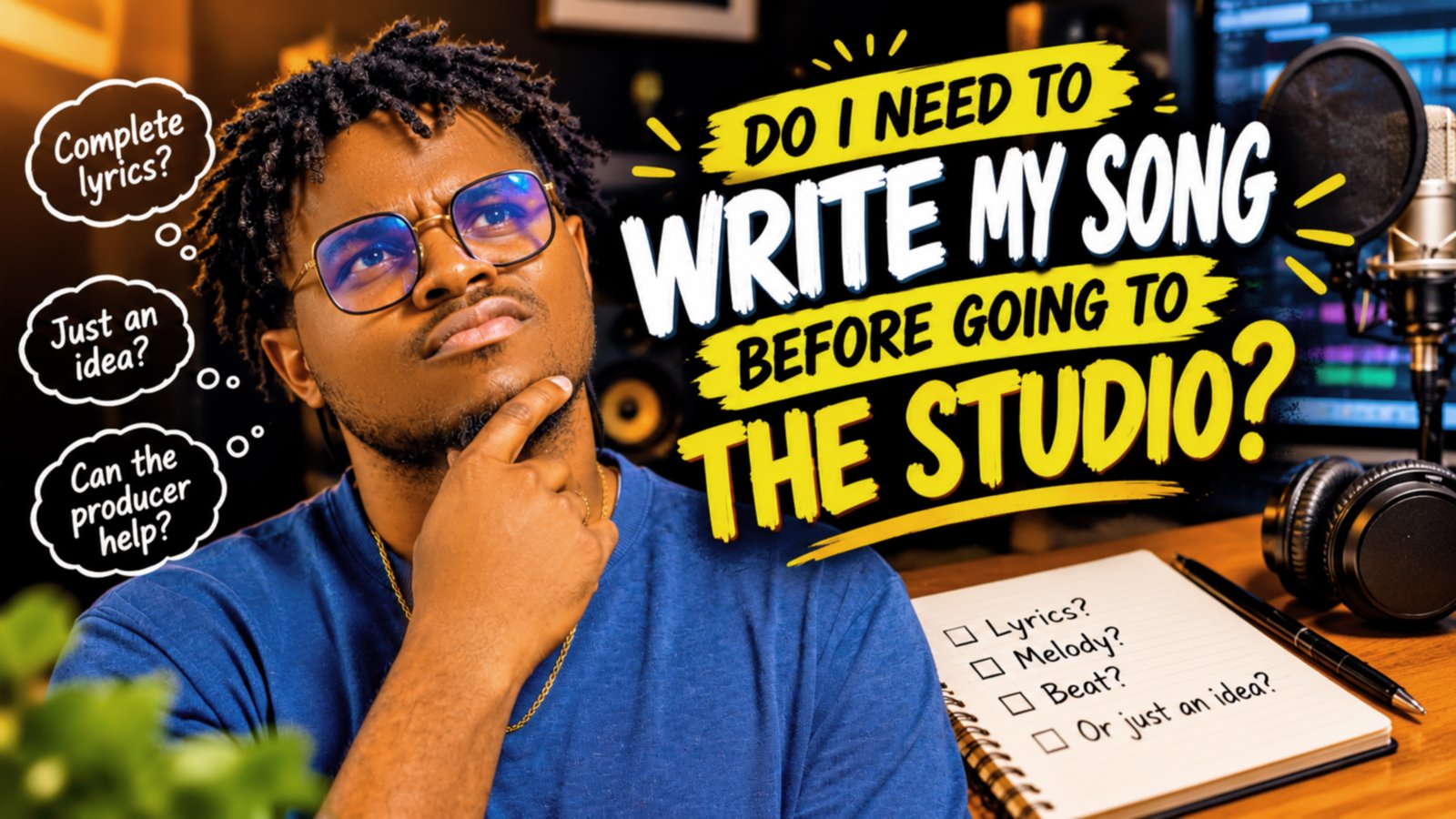

If you are planning to record your first song, one question may be on your mind: Do I need to write my song before going to the studio, or can I work with a producer to create it from scratch?
The short answer is no, you do not necessarily need to finish writing your song before entering a recording studio. However, having some ideas prepared can make your session more productive, reduce unnecessary delays, and help you get more value for your money.
The right approach depends on your experience, the type of song you want to record, your budget, and the services your studio provides. Some artists arrive with complete lyrics and a melody. Others come with only a song title, a personal experience, a voice note, or an idea for a catchy chorus. Both approaches can work when the recording session is planned properly.
At Cfatmusic Studios, where the goal is to help artists launch, grow, and monetize their music careers, understanding what to prepare before recording can help beginners make better decisions about their first studio session.
In this guide, we will explain what you should prepare before going to the studio, when it makes sense to write your song beforehand, how producers can help you develop unfinished ideas, and how to avoid wasting time and money during recording.
Do I Need to Write My Song Before Going to the Studio?
No, you do not have to write your entire song before going to the studio. You can arrive with completed lyrics, a rough draft, a melody, a song concept, or even a simple idea you want to develop with a producer.
However, you should understand the difference between arriving without finished lyrics and arriving without any direction.
If you have already written your verses, chorus, and other sections, the studio session can focus more on the beat, vocal performance, recording, and production. If you have only an idea, you may need additional time for songwriting, melody development, arrangement, and experimentation.
Neither approach is automatically better. What matters is knowing what you want to achieve and agreeing with your producer on how the session will work.
For example, imagine two artists planning to record an Afrobeats song.
The first artist arrives with complete lyrics, a recorded voice note of the melody, and a reference song that communicates the desired sound. The producer can begin developing the instrumental and arranging the song around the artist’s performance.
The second artist arrives with the title My Time, an idea about overcoming financial struggles, and a few lines they have been singing at home. This artist may need a collaborative session in which the producer helps develop the melody, establish the rhythm, and organize the lyrics into a complete song.
Both artists can leave with a good recording. However, the second artist may need more creative development time before the final recording begins.
The important lesson is this: you do not need a finished song, but you should prepare whatever ideas you already have.
Why Writing Your Song Before Recording Can Help
Writing your song before entering the studio has several advantages, especially if you are working with a limited budget or recording for the first time.
1. You spend more time recording and less time searching for ideas
A recording session involves more than singing into a microphone. You may need to establish the beat, settle on a melody, organize the song sections, record multiple vocal takes, and make adjustments to the performance.
If you are still trying to remember your lyrics or decide what to sing next, those creative decisions can consume time that could otherwise be spent recording.
Consider an artist who books a two-hour session. If much of that time goes into writing a second verse, the artist may have less time available for recording the chorus properly, correcting mistakes, or capturing backing vocals.
Preparing your lyrics beforehand does not guarantee a perfect session, but it gives you a clearer starting point.
2. You have more time to practise your delivery
A lyric may look good on paper but become difficult to sing when placed over a beat.
You might discover that a line has too many syllables, a word feels unnatural at the tempo, or a phrase requires more breath than you have available. These issues are easier to identify when you practise before the session.
Try singing your lyrics aloud several times. Pay attention to where you breathe, which words feel comfortable, and whether the melody sounds natural.
You do not need to be an experienced vocalist to benefit from this exercise.
3. You can communicate your musical ideas more clearly
A producer needs to understand the kind of song you want to create. Your lyrics, melody, voice notes, and reference tracks can help communicate that vision.
For instance, if you want an emotional Afrobeats song about a difficult relationship, you might already have a chorus that expresses the central message. Sharing that chorus with the producer provides a starting point for the instrumental, tempo, and arrangement.
Without that preparation, you may spend a significant part of the session trying to explain an idea that you have not yet fully developed.
The Independent Society of Musicians recommends discussing recording preparations with the producer and engineer in advance, including arrangements, lyrics, tempos, and reference recordings where relevant.
4. You can make better decisions about the song
Writing beforehand gives you an opportunity to examine your lyrics objectively.
Does the chorus communicate the song’s main idea? Does the second verse add something new? Are there lines that sound impressive but do not fit the story?
You can revise these sections before paying for studio time.
This does not mean every line must be perfect before recording. Some of the best changes happen when a melody meets an instrumental or when a producer suggests a different arrangement. The goal is to arrive with enough preparation to make those changes intentionally rather than struggling to find the song’s direction.
What If You Cannot Write a Complete Song?
You can still go to the studio. You simply need to know what you are bringing to the session and what kind of help you need.
There are several ways to begin developing a song without having complete lyrics.
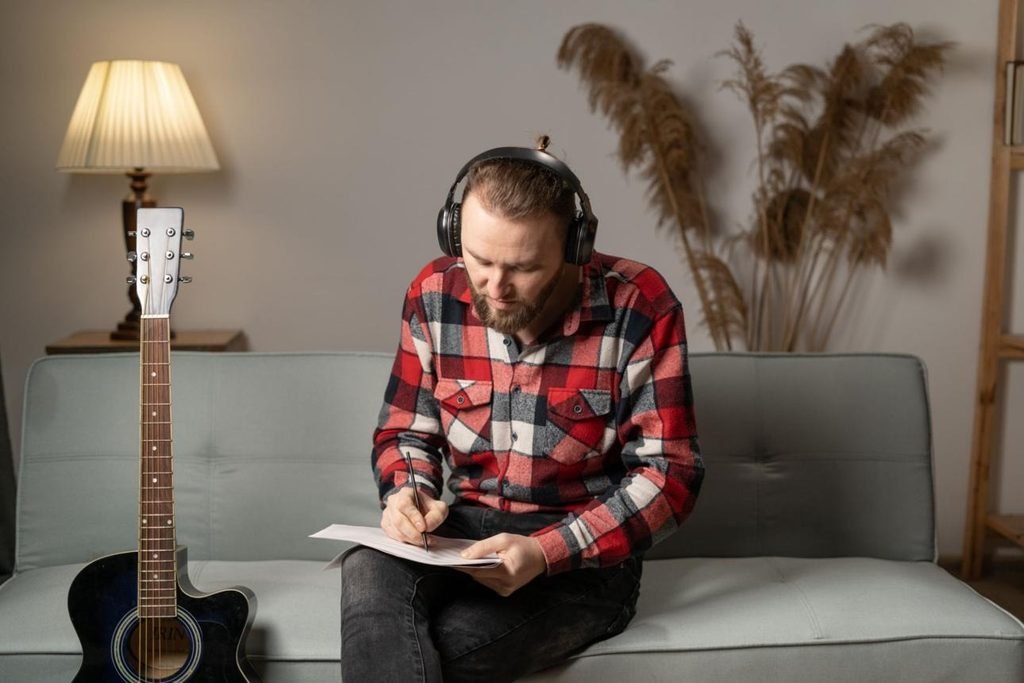
1. Bring a song idea
You might have a story about your life, a relationship experience, a personal struggle, a celebration, or an observation about everyday life. Explain what you want the song to communicate and who you imagine listening to it.

2. Bring a voice note
Record yourself humming the melody, singing a chorus, or experimenting with a rhythmic phrase on your phone. The recording does not need professional sound quality. Its purpose is to preserve your idea so you can share it with the producer.
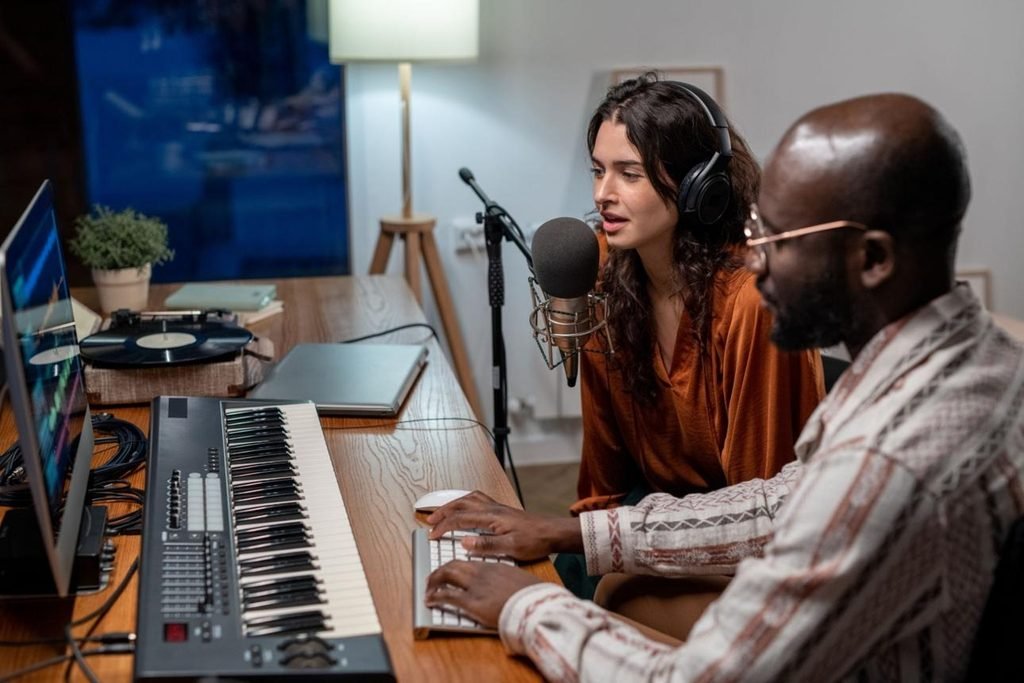
3. Start with a chorus or hook
You do not need two complete verses before you begin. A memorable chorus can give the song its central message and musical identity. You and the producer can then work on verses that support that idea.
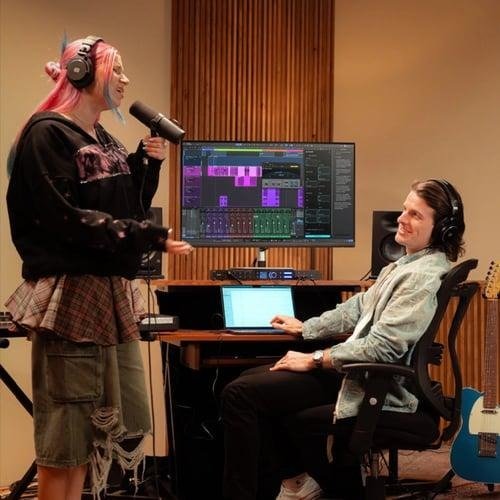
4. Bring reference songs
Identify two or three songs that capture the general mood, groove, energy, or vocal style you like. Explain what appeals to you about each one. Use them as creative references, not as songs to copy.
A good producer can help you develop these starting points into a structured song. Depending on the service you book, this may involve creating the instrumental, developing a melody, refining lyrics, arranging the sections, and guiding the vocal performance.
If you need help building a song from an initial idea, explore the full music production service at Cfatmusic Studios.
Should You Write the Lyrics First or Create the Beat First?
There is no single songwriting method that works for every artist. Some songs begin with lyrics, some begin with a melody, and others begin with a beat.
The best starting point depends on your creative process and the kind of music you want to make.
| Approach | Best for | Main advantage | Potential challenge |
| Lyrics first | Storytelling, gospel, conscious music, personal songs | Helps establish the message | Lyrics may need adjustment to fit the beat |
| Beat first | Afrobeats, Amapiano, dance music, trap | Helps establish groove and rhythmic delivery | You may struggle to find lyrics that fit naturally |
| Melody first | Singers with strong melodic instincts | Captures the emotional identity of the song | Finding suitable words can take time |
| Collaborative songwriting | Beginners or artists who enjoy working with producers | Ideas can develop through experimentation | Requires clear communication and enough time |
Writing the lyrics before creating the beat
This approach works well when the message matters most.
Imagine you want to write a song about the pressure young Nigerians face when trying to make a living. You already know the story you want to tell, the emotions you want listeners to feel, and the message you want the chorus to communicate.
Writing the lyrics first allows you to organize the story before deciding how the instrumental should support it.
However, you should remain flexible. Some lines may need to be shortened, repeated, or rewritten to fit the groove.
Creating the beat before writing the lyrics
This is a common practical approach for beat-driven genres such as Afrobeats and Amapiano.
A producer might create a drum pattern, bass line, chord progression, and instrumental melody. You then listen to the beat and experiment with melodies, rhythmic phrases, and lyrics.
Sometimes, the rhythm itself inspires the words. You might discover a catchy phrase while humming over the instrumental, even though you had no lyrics when you entered the studio.
The important thing is not to force a lyric into a melody that does not suit it. Allow the beat and vocal ideas to influence each other.
Writing the song together with the producer
Collaborative songwriting can be particularly useful if you have musical ideas but struggle to turn them into a complete song.
For example, you might arrive with a chorus about gratitude. Your producer helps you establish the groove, you experiment with different melodies, and together you identify a suitable verse structure.
Berklee’s music production and songwriting resources describe how songwriters can develop arrangements, tempo, instrumentation, vocal parts, and song structure as interconnected parts of creating a recorded song.
If you prefer this method, discuss it with the studio before booking. Not every recording session includes songwriting or beat creation, and these services may have different fees and time requirements.
What Should You Prepare Before Going to the Recording Studio?
Even if you have not finished your song, you can prepare a few things that will make your first studio session easier.
Your pre-studio checklist
☑️Decide the main message or story of your song
☑️Write down any lyrics you already have
☑️Record your melody or chorus as a voice note
☑️Choose reference songs that communicate your preferred sound
☑️Decide whether you need a beat, songwriting help, or recording only
☑️Discuss the budget, session duration, and services with the studio
☑️Practise the parts you already know
☑️Save your lyrics and voice notes where you can access them easily
You do not have to complete every item before booking. The checklist helps you identify what you have already prepared and what still needs attention.
One especially important step is to communicate with the studio before your appointment. Explain whether you are bringing a finished song, an unfinished draft, or an idea that needs to be developed. That conversation can help the studio recommend the appropriate service and allocate enough time.
If your lyrics and melody are ready and you mainly need to record your vocals, you can look into the session recording service at Cfatmusic Studios.
Common Mistakes to Avoid When Preparing Your Song
1. Waiting for the song to be perfect before booking
Some artists keep rewriting the same lyrics because they are afraid of making mistakes in the studio.
You should prepare, but you do not have to solve every creative problem alone. A good session can help you identify weak sections, improve your melody, and make the arrangement more effective.
If you have a solid idea and know what you want to achieve, you can discuss the next steps with your producer.
2. Assuming the producer will automatically write everything
A producer’s responsibilities vary. Some specialize in creating instrumentals and recording vocals, while others also write lyrics, develop melodies, or provide full songwriting assistance.
Do not assume that every studio package includes all these services.
Before booking, ask what is included in the quoted price and whether songwriting or lyric development attracts an additional fee.
3. Memorizing everything without keeping a backup
Even experienced artists can forget lyrics, change a line unexpectedly, or struggle to remember a melody they created at home.
Keep a written copy of your lyrics and save your voice notes. You can use your phone during the session if necessary.
This is especially helpful when recording songs with multiple verses, intricate melodies, local expressions, or a mixture of English and Nigerian Pidgin.
4. Choosing complicated lyrics that do not fit the rhythm
A line may read beautifully but be difficult to deliver naturally over the beat.
Try performing the lyrics over a simple rhythm before recording. If you consistently stumble over a phrase, consider simplifying the wording or changing the melody.
The objective is not to use the biggest words. It is to communicate your message in a way that sounds natural and memorable.
5. Failing to agree on the session’s purpose
A session intended for vocal recording is different from a session in which you are creating the beat, writing lyrics, arranging harmonies, and recording vocals from scratch.
When the purpose is unclear, both the artist and producer may have different expectations about what can realistically be completed.
Agree on the scope of work before the session begins.
How Much Does Song Preparation Affect Your Recording Budget?
Song preparation can affect your recording budget because the amount of work required varies from one project to another.
An artist who arrives with finished lyrics, a clear melody, and an approved instrumental may need less creative development time than an artist who needs help writing the song, creating the beat, and experimenting with different melodies.
However, there is no universal rule that a fully written song will always be cheaper to record. The final cost depends on the studio’s pricing structure, the services included, the complexity of the project, and the number of revisions required.
Before making payment, ask the studio these questions:
- Does the quoted price cover recording only, or does it include beat production?
- Can the producer help me write or complete my lyrics?
- Is melody development included?
- Does the service cover vocal editing, mixing, and mastering?
- How much time is allocated to the session?
- What happens if we cannot finish the song during the scheduled session?
At Cfatmusic Studios, artists can explore the full music production service to understand the options available for developing a song, rather than assuming that every project must begin with finished lyrics.
Remember that the cheapest session is not necessarily the best value, and the longest session does not automatically produce the best song. Clear expectations, focused preparation, and good collaboration are more useful than simply spending more time in the studio.
Frequently Asked Questions
Can I go to a recording studio without knowing how to write songs?
Yes. You can work with a producer or songwriter who offers songwriting assistance. You should still bring whatever ideas you have, such as a theme, a story, a melody, or a preferred musical style. Ask whether songwriting support is included in the studio’s services.
Can a producer help me write my lyrics?
Some producers offer lyric writing or collaborative songwriting, while others focus primarily on beat production, arrangement, and recording. Confirm the producer’s services before booking. If you need help developing your song from the initial idea to a complete production, look for a service that specifically includes that work.
Should I memorize my lyrics before recording?
It is helpful to practise your lyrics before recording, but you do not have to memorize every line. Keeping a written copy or a note on your phone can help you maintain consistency. Familiarity with your lyrics will generally make it easier to concentrate on your delivery and expression.
Is it better to record a song with a beat or without one?
Neither approach is universally better. Some artists develop their melodies and lyrics over an instrumental, while others write a melody first and build the instrumental around it. The best method is the one that helps you create a convincing song and deliver your performance comfortably.
Can I finish writing my song during the studio session?
Yes, provided your studio and producer are willing to accommodate songwriting during the session. You should allow enough time for developing lyrics, trying melodies, arranging sections, and recording. If you have a strict budget or a limited booking window, consider completing as much preparation as possible beforehand.
What if I have only a chorus and no verses?
That is a perfectly reasonable starting point. A strong chorus can establish the main message and emotional direction of your song. You can work with a songwriter or producer to develop verses that expand on the idea and create a complete structure.
Final Thoughts: Prepare What You Can, Then Work With Your Producer
So, do you need to write your song before going to the studio?
No, but you should prepare as much as you reasonably can.
If you have complete lyrics, practise them and bring them along. If you have only a melody, record it on your phone. If you have a story or a song concept, write down the main points so you can explain them clearly.
And if you genuinely need help developing the song from scratch, there is nothing wrong with that. Find a producer who understands your vision and offers the kind of creative support you need.
The goal is not to enter the studio knowing everything. It is to enter with a clear understanding of what you want to achieve, what you have already prepared, and what you need help with.
At Cfatmusic Studios, artists can explore production and recording options suited to their projects and take the next step towards turning their musical ideas into finished recordings.
Your first song does not have to be perfect before you begin; It needs a direction, a willingness to learn, and the right creative process to bring it to life.