
Table of Contents
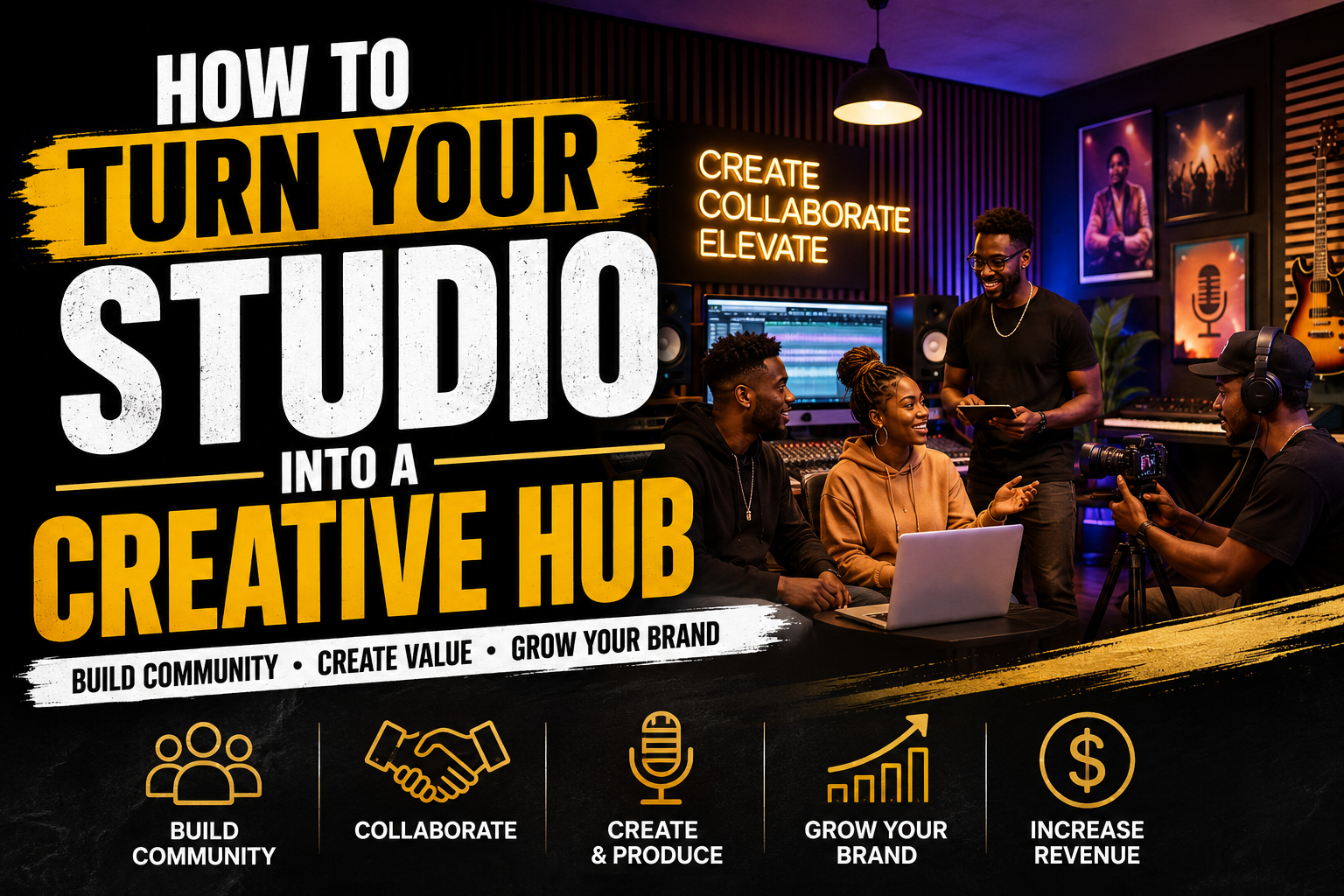
Many recording studios focus on one thing: recording songs. While that can generate income, it often limits long-term growth. Today’s most successful studios do far more than provide microphones, computers, and soundproof rooms. They become places where artists discover collaborators, producers find clients, photographers build portfolios, and entrepreneurs develop creative businesses.Thats’ why it is important to read this exposition on How to Turn Your Studio Into a Creative Hub That Attracts Artists, Brands, and Business Opportunities till the end.
That shift from being “just another recording studio” to becoming a creative hub can dramatically improve your reputation, client retention, and revenue. It also creates a stronger community around your brand.
This transformation does not happen by accident. It requires deliberate planning, consistent networking, and a willingness to offer value beyond recording sessions.
According to the International Federation of the Phonographic Industry (IFPI), 2025, music has become increasingly driven by fan engagement, digital communities, and creator collaboration rather than simply recorded releases alone (https://www.ifpi.org). That trend presents a major opportunity for studios willing to become creative ecosystems instead of production facilities.
What Is a Creative Hub?
A creative hub is a place where different creative professionals regularly work together.
Instead of serving only recording artists, a creative hub brings together producers, songwriters, vocal coaches, videographers, photographers, graphic designers, DJs, marketers, content creators, podcast hosts, dancers, event organizers, and music business professionals.
The goal is not simply to rent studio time.
The goal is to become the place where creative ideas become finished products.
For example, an artist might arrive to record a single. Before leaving, they book cover art, arrange a music video, receive distribution support, schedule promotional content, and connect with another songwriter for future collaborations.
Everything happens within one trusted ecosystem.
This creates value for clients while opening multiple income streams for the studio.
Creative hubs also benefit from network effects. Every new creative professional introduced into the ecosystem increases opportunities for everyone else.
Instead of competing solely on studio quality or pricing, the business becomes known for solving creative problems from start to finish.
Build a Community Before You Build More Services
One of the biggest mistakes studio owners make is expanding services before building relationships.
Community comes first.
People return to places where they feel welcomed, supported, and connected.
That means intentionally creating opportunities for creatives to interact even when they are not booking studio sessions.
Some studios host listening parties for upcoming releases.
Others organize songwriting camps, producer meetups, beat showcases, networking evenings, educational workshops, or live podcast recordings.
These events create conversations that eventually lead to business.
Research from the National Endowment for the Arts consistently shows that creative participation strengthens collaboration, innovation, and local economic activity (https://www.arts.gov).
Building community also increases referrals.
Artists naturally recommend places where they have built meaningful relationships, not simply completed transactions.
The most successful creative hubs become known as gathering places rather than businesses.
People visit because they know opportunities exist there.
Offer Complementary Creative Services
Many artists prefer working with one trusted team rather than coordinating multiple freelancers.
That is why successful creative hubs gradually add services that naturally support music production.
These may include music videos, photography, cover artwork, branding consultations, content creation for social media, podcast production, livestream setups, artist coaching, distribution assistance, playlist pitching guidance, merchandise design, or publishing administration.
Not every service needs to be performed in-house.
Many creative hubs partner with reliable freelancers.
The studio becomes the project manager while trusted specialists deliver their expertise.
This model reduces overhead while expanding what clients can access.
It also improves customer retention.
Instead of losing clients after recording, the relationship continues throughout the release cycle.
According to MIDiA Research, today’s independent artists increasingly seek integrated creative services because managing multiple providers can slow releases and increase costs (https://www.midiaresearch.com).
Studios that simplify this process gain a competitive advantage.
Design Your Studio Around Collaboration
The physical environment matters more than many owners realize.
People collaborate better in spaces designed for conversation.
A waiting room with comfortable seating can become a networking space.
An open lounge encourages artists to exchange ideas.
Dedicated writing rooms allow producers and songwriters to brainstorm before recording.
Good lighting makes spontaneous content creation easier.
Reliable internet supports livestreams, uploads, and remote collaborations.
Simple details also matter.
Coffee stations.
Phone charging areas.
Presentation screens.
Whiteboards for planning projects.
Comfortable furniture.
These features encourage people to stay longer.
The longer creatives remain in your space, the more opportunities arise for introductions, partnerships, and future bookings.
The goal is to make your studio somewhere people want to spend time rather than somewhere they leave immediately after recording.
Become an Educational Resource
Knowledge builds authority.
Studios that educate often attract more loyal clients than studios that simply provide equipment.
Education can take many forms.
Short workshops.
Masterclasses.
Music business seminars.
Beat-making classes.
Mixing tutorials.
Artist development programs.
Podcast interviews.
Career coaching.
These activities position your studio as an industry resource rather than just a service provider.
They also create additional marketing content.
Every workshop can generate videos, photographs, blog articles, newsletters, and social media posts.
Google increasingly rewards websites demonstrating experience and expertise through genuinely helpful content.
Publishing educational resources also improves search visibility over time.
According to Google Search Central, people-first content should demonstrate firsthand expertise, satisfy user needs, and provide original value instead of simply summarizing existing information (https://developers.google.com/search).
That principle applies equally to music studios creating educational content.
Use Technology to Keep the Community Connected
A creative hub should not disappear when people leave the building.
Online communities help maintain momentum between projects.
Many studios use private communities where members share works in progress, announce opportunities, request collaborators, and receive feedback.
Email newsletters remain valuable for promoting events, workshops, new services, and artist success stories.
Project management platforms simplify communication between producers, artists, engineers, designers, and videographers.
Client portals also improve professionalism by allowing customers to access invoices, booking information, contracts, project updates, and downloadable files from one location.
Technology strengthens relationships when it supports communication rather than replacing it.
The objective is simple.
Keep creatives connected long after recording sessions end.
Develop Strategic Partnerships
No creative hub succeeds alone.
Strategic partnerships expand opportunities without requiring significant investment.
Look beyond the music industry.
Local universities often seek industry speakers.
Fashion designers need promotional content.
Restaurants host live performances.
Event venues require entertainment.
Technology companies sponsor creator events.
Radio stations look for fresh local talent.
Media organizations need expert commentary.
These partnerships expose your studio to entirely new audiences.
The UNESCO Creative Cities Network has repeatedly highlighted that collaboration between cultural organizations, businesses, educational institutions, and creative entrepreneurs strengthens local creative economies (https://www.unesco.org).
Your studio can play a similar role within your city.
The more organizations connected to your business, the stronger your reputation becomes.
Measure Success Beyond Recording Sessions
Traditional studios often measure success using booked hours.
Creative hubs measure much more.
Track how many artists return for additional services.
Monitor referrals from existing clients.
Measure attendance at community events.
Count partnerships established.
Review educational program participation.
Evaluate social media engagement after collaborative projects.
Monitor how many artists release successful work after using your services.
These indicators reveal whether your studio is becoming part of people’s creative journey rather than simply a place they rented for a few hours.
Long-term relationships almost always produce greater business value than one-time bookings.
Common Mistakes That Prevent Studios From Becoming Creative Hubs
Many studios struggle because they focus exclusively on expensive equipment while neglecting relationships.
Others try to offer every creative service immediately, stretching resources too thin and reducing quality.
Some organize events without following up afterward, missing opportunities to build lasting partnerships.
Another common mistake is inconsistent branding. A creative hub should clearly communicate its purpose across its website, social media, and physical space. Visitors should immediately understand that they are entering a collaborative environment, not just a recording facility.
Finally, avoid treating every interaction as a sales opportunity. The strongest creative communities grow through generosity, trust, and shared success. When people consistently receive value, business naturally follows.
Conclusion
Turning your studio into a creative hub requires a shift in mindset more than a large financial investment. Recording music remains important, but it should become only one part of a broader creative ecosystem.
Focus first on building relationships. Create opportunities for collaboration. Add complementary services thoughtfully. Invest in education, partnerships, and community-building. Use technology to keep people connected, and measure success by the strength of your network as much as your booking calendar.
Studios that embrace this model become more resilient because they are no longer dependent on recording sessions alone. They become places where ideas are developed, careers are launched, businesses are formed, and creative communities thrive. Over time, that reputation becomes one of the most valuable assets a studio can own.