


Table of Contents
For many studio owners, recording sessions remain the primary source of income. Unfortunately, they are also one of the least predictable. Artists cancel appointments, projects get delayed, and slow seasons can leave expensive equipment sitting idle while rent and utility bills continue to arrive. So in this Exposition, i will be talking about Discover how recording studios can diversify revenue beyond sessions with practical strategies, recurring income ideas, and real-world business insights.
First and foremost, the studios that survive long-term rarely depend on recording alone. Instead, they build multiple revenue streams that support one another. Recording attracts clients, but additional services increase customer lifetime value, stabilize monthly income, and reduce financial risk.
This shift has become increasingly important as the music industry evolves. According to the International Federation of the Phonographic Industry (IFPI), 2025, digital music consumption continues to grow worldwide, creating opportunities beyond traditional recording services. (https://www.ifpi.org)
Whether you operate a professional commercial studio or a growing independent facility, diversifying your income can transform your business from a room that rents studio time into a complete creative company.
Why Recording Sessions Alone Are No Longer Enough
Many studio owners enter the industry because they love music production. Few start by thinking about business sustainability.
The challenge is that recording income depends on booked hours. If the calendar is empty, revenue stops immediately. Fixed costs, however, continue every month.
Equipment maintenance, software subscriptions, internet, electricity, staff salaries, marketing, and rent do not disappear because bookings slow down.
A diversified business spreads that risk.
Instead of relying on one service, successful studios build several complementary offerings that serve artists throughout their careers.
For example, a musician may begin by recording a single. Later, they might need mixing, mastering, cover artwork, distribution, music videos, promotional photography, playlist pitching, social media content, and career coaching.
Each additional service increases revenue without requiring the studio to find an entirely new customer.
This approach also strengthens client relationships. Artists prefer working with businesses that understand every stage of the music release process instead of coordinating multiple providers.
The result is better customer retention and more predictable cash flow.
Turn Your Studio into a Full-Service Creative Hub
One of the simplest ways to diversify is by expanding the services you already understand.
Many studios already own cameras, lighting equipment, editing software, or graphic design tools. Others have trusted partners who provide those services.
Instead of referring clients elsewhere, consider offering integrated creative packages.
These may include music production, vocal recording, mixing, mastering, lyric videos, cover artwork, press photos, short-form promotional videos, Electronic Press Kits (EPKs), and digital distribution assistance.
Artists increasingly value convenience.
A single package that handles production through release often feels more valuable than purchasing each service separately.
According to MIDiA Research, artists continue to seek independent solutions that simplify music creation, marketing, and monetization. (https://www.midiaresearch.com)
Studios can also offer release strategy consultations. Many independent musicians know how to record songs but struggle with planning successful releases.
Helping artists prepare release timelines, promotional schedules, and content calendars creates another valuable consulting service with minimal overhead.
Build Recurring Revenue Instead of One-Time Sales
The healthiest businesses generate income even when the owner is not actively recording clients.
Recurring revenue creates stability.
One effective model is membership programs.
Instead of charging only per session, studios can introduce monthly memberships that include discounted recording hours, priority booking, production feedback sessions, educational workshops, cloud project storage, or exclusive networking events.
Another opportunity is artist development programs.
Rather than producing one song, studios can guide artists over several months.
These programs may include songwriting feedback, vocal coaching, recording sessions, branding consultations, release planning, performance preparation, and business mentoring.
Because artist development typically spans months, it provides predictable monthly income while producing stronger client results.
Subscription-based educational communities are another growing opportunity.
Studios with experienced producers can teach beat production, vocal recording, mixing techniques, home studio setup, or music business fundamentals through paid online memberships.
The global e-learning market continues expanding rapidly, making digital education an increasingly attractive revenue source, according to UNESCO and broader education industry research. (https://www.unesco.org)
Unlike studio sessions, digital education can scale without requiring additional physical studio time.
Monetize Your Knowledge, Not Just Your Equipment
Years of studio experience represent valuable intellectual property.
Many producers underestimate how much aspiring musicians and engineers are willing to pay for practical education.
Workshops can cover subjects like recording vocals professionally, producing Afrobeats, mixing for streaming platforms, songwriting, music publishing, copyright basics, or building a home studio.
Studios can also develop downloadable products.
These include sample packs, drum kits, vocal presets, mixing templates, production checklists, project files, MIDI packs, or recording guides.
Once created, these products generate income repeatedly with minimal ongoing effort.
Licensing original beats represents another significant opportunity.
Instead of creating music only for paying recording clients, producers can sell non-exclusive licenses to multiple artists while reserving exclusive rights for premium buyers.
Many studios also expand into podcast production.
Podcast creators need recording, editing, mixing, intro music, and distribution support.
Unlike musicians, podcasters often publish weekly or monthly, creating ongoing business relationships instead of one-time projects.
This makes podcast production particularly attractive for generating recurring work throughout the year.
Help Artists Grow After the Music Is Finished
Recording is only one stage of an artist’s journey.
After a song is complete, many musicians face new challenges.
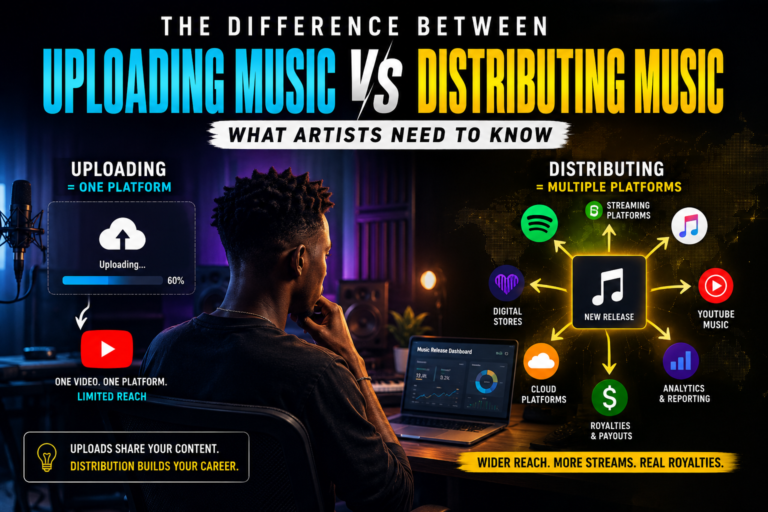
They need distribution, royalty collection, copyright registration, marketing strategies, playlist pitching, YouTube optimization, social media campaigns, advertising, and audience growth.
Studios that understand these areas can create entirely new service categories.
For example, assisting artists with Digital Service Provider (DSP) distribution through reputable distributors adds value without requiring major infrastructure.
Similarly, studios can provide streaming optimization consultations by helping artists prepare metadata correctly, create pre-save campaigns, and organize release schedules.
Marketing support has become equally important.
Artists consistently ask questions like:
“How do I promote my song?”
“Why isn’t my music getting streams?”
“How do I build fans?”
Studios that answer these questions professionally become trusted long-term partners rather than temporary service providers.
According to the Recording Academy, artist careers increasingly require business knowledge alongside creative talent. (https://www.grammy.com)
That creates opportunities for studios willing to bridge both worlds.
Partner with Businesses Outside the Music Industry
Diversification does not have to target musicians alone.
Many local businesses need professional audio and video services.
Corporate clients often require commercials, voice-over recording, training videos, podcasts, interviews, product launches, and social media content.
Churches may need livestream audio support, choir recordings, event production, or worship albums.
Schools sometimes require graduation videos, educational podcasts, or media training.
Non-profit organizations frequently need campaign videos, documentaries, and public awareness content.
These clients often have larger budgets than independent musicians and may return regularly.
Strategic partnerships with photographers, videographers, event planners, advertising agencies, universities, and media organizations can generate consistent referral business throughout the year.
Common Mistakes Studios Make When Diversifying
Diversification works best when it remains focused.
A common mistake is offering every possible creative service without building expertise.
Instead, expand into areas that naturally complement your existing strengths.
Another mistake is failing to price bundled services correctly.
Packages should provide genuine value while protecting profit margins.
Studios also underestimate marketing.
Adding new services means little if existing clients never hear about them.
Each new revenue stream deserves dedicated website pages, social media promotion, email campaigns, and client education.
Finally, avoid abandoning your core service.
Recording should remain the foundation of your reputation.
New offerings should strengthen that foundation rather than distract from it.
Conclusion
The most successful studios today are no longer just recording facilities. They are creative businesses that support artists from idea to release and beyond.
Recording sessions will always remain important, but they should not be the only source of income. By combining production with education, artist development, digital products, podcast services, consulting, content creation, and business partnerships, studios can build a more resilient business that generates revenue throughout the year.
Diversification does not happen overnight. Start by identifying the services your current clients already ask for. Add one complementary offering, refine your workflow, gather feedback, and expand gradually. Over time, those additional income streams can reduce dependence on hourly bookings, improve client loyalty, and create a business that continues growing even when recording sessions slow down.






[…] business question: should studio owners spend more time chasing grants or focus almost entirely on growing client revenue? Hence, Grants vs Client […]